Key Takeaways
In this article I will cover:
- Why It's the Hardest Assessment: Success in the Plan Ex calls for a wide range of skills at once, from rapid assimilation of information to mental maths and briefing under pressure.
- The Format: The core structure stays the same, but the timings and intensity differ dramatically between Briefing and Main Board.
- Four Phases, Strict Sequence: Mission analysis, planning, discussion and the brief. Each phase builds on the last, so an early error compounds through everything that follows.
- Analysis Before Planning: Resist the urge to start solving. A plan built on a half-understood situation is a flawed plan, so give the first quarter of your solo time to understanding the problem.
- The Importance of Mental Maths: A single plan can call for dozens of speed, distance and time calculations. Drill until it becomes automatic.
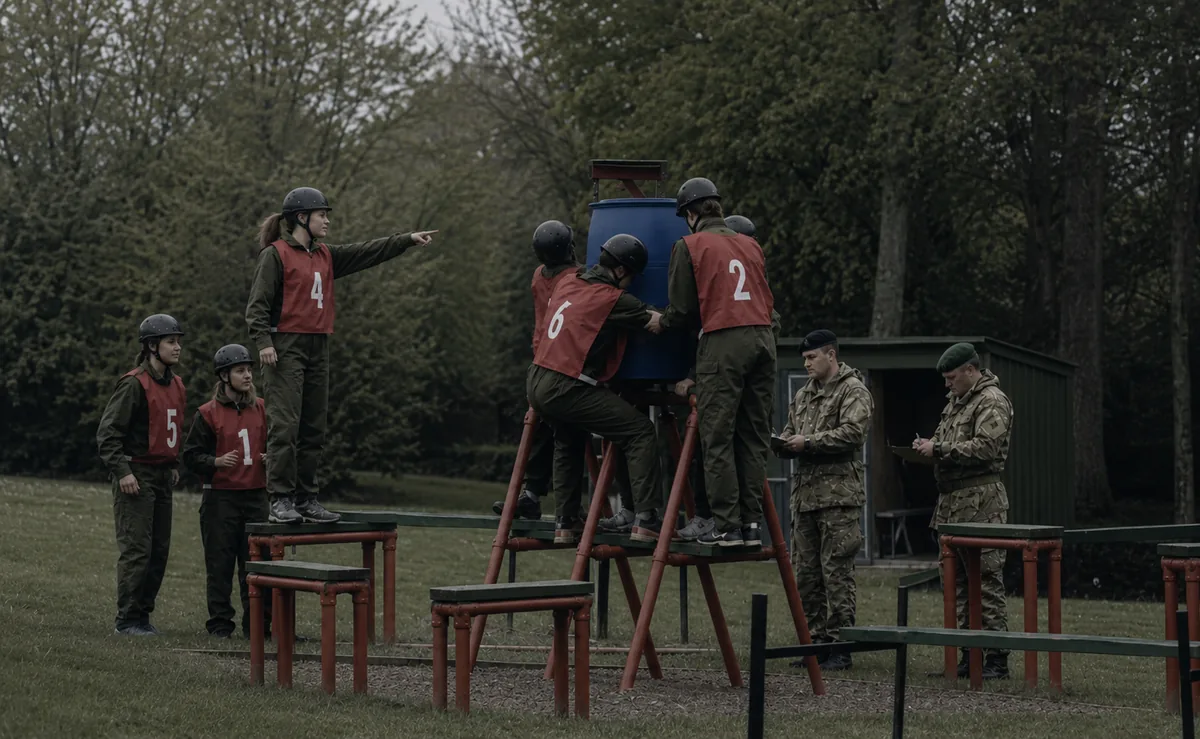
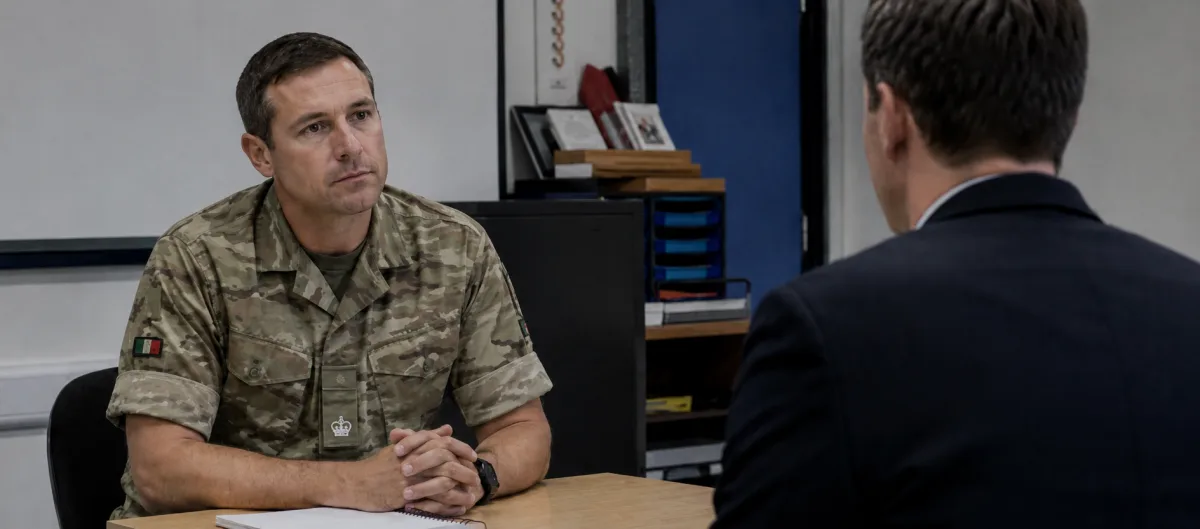
If you ask any British Army officer, past or present, what their most uncomfortable moment at Main Board was, you are likely to get the same answer. The Plan Ex grilling. I still remember mine like it was yesterday, though it was actually over eight years ago. The looks of disapproval from the DS every time I answered a question, and the feeling of being completely out of my depth.
I didn't know it at the time, but this is how almost every candidate feels. The planning exercise is designed to do this, because the DS wants to see how you respond when you are put on the back foot and forced to make decisions when you feel like you have no idea what's going on. They want to know whether you will rise to the challenge or whether you will fold. After all, you may have to do this for real, with soldiers looking back at you rather than colonels with clipboards.
In this guide I will break the assessment down in full. The format at both Briefing and Main Board, the four phases every planning exercise follows, and the mistakes that you must avoid.
What Is the Planning Exercise?
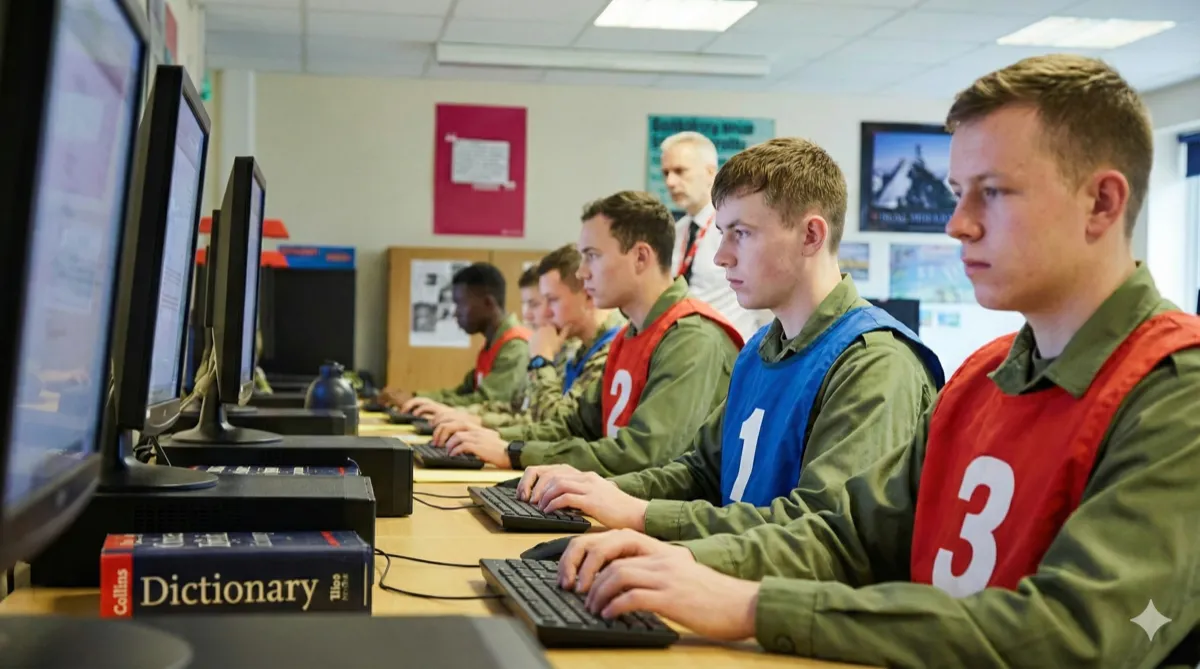
The planning exercise, usually shortened to the Plan Ex, is an assessment you sit at both Briefing and Main Board. You are given a dense written scenario, a map, and a tangle of facts and figures. Your task is to produce a workable plan against the clock, and then to brief it.
It is the most challenging assessment you will face at AOSB. Unlike the others, which typically test a single skill or quality, success in the Plan Ex calls for a wide range of skills. You will be required to:
- Assimilate complex information rapidly.
- Handle ambiguity with comfort.
- Prioritise what is important and disregard what is not.
- Come up with a defensible plan under extreme time pressure.
- Handle multiple speed, distance and time questions in your head.
- Contribute effectively to the group planning phase.
- Brief your plan with confidence.
- Think on the spot while facing probing questions.
It is the assessment that most clearly reflects the demands of being a British Army officer, a role where decision-making, composure under pressure, the ability to plan effectively and communicate it convincingly to soldiers are key requirements.
After all, one day you may have to do this for real in a combat environment, and lives may depend on your ability to get it right.
At Briefing
The session begins with a 40-minute tutorial, where you work through a simple plan and are introduced to the way you will be required to write your answer. You then move into the exam room with a new scenario, and have about 40 minutes to work through it before handing your plan in.
Next, you go with your syndicate into a classroom for a discussion, where you converge on an agreed plan. How the brief itself is then handled varies, and candidate reports differ. Some describe the group delivering a single collective brief, while others say one candidate is asked to give a very short brief on the agreed plan.
The session is described as a tutorial, but do not be fooled. Your performance is being assessed, and the plan you hand in will have a big impact on your category. If you turn up expecting to pick everything up in the 40-minute tutorial run immediately before you do it for real, you are putting yourself at a significant disadvantage.
At Main Board
Main Board strips that scaffolding away. There is no tutorial, and the scenario is harder. You have one hour to work through it on your own, which you should split into roughly fifteen minutes of analysis and forty-five minutes of planning.
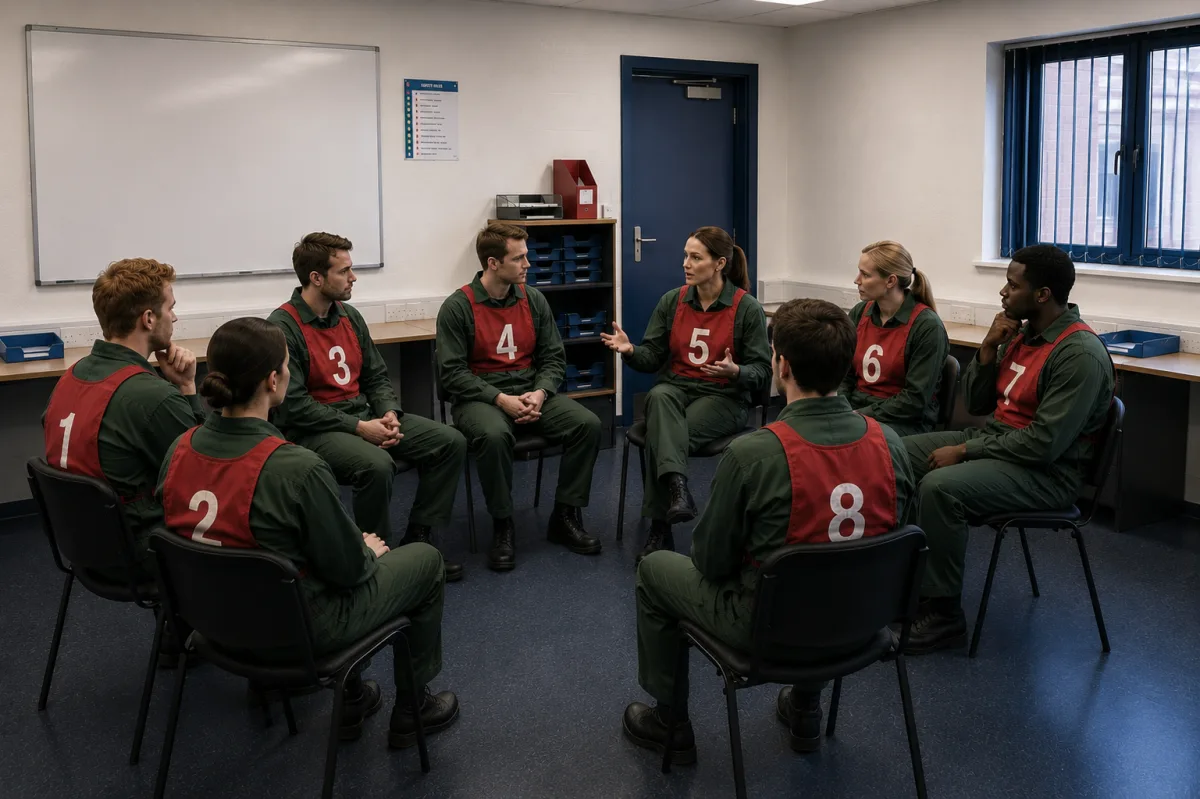
After handing in your plan, you go into the discussion with your syndicate, where you have around thirty minutes to converge on a single agreed plan. Then each candidate is called in turn, in a random order, to brief their own plan in full.
This is the plan you wrote and handed in earlier, and the DS will have it in front of them. They will use it to probe your reasoning and will test your mental maths on the spot, while the rest of the syndicate sit in silence watching on. The phase lasts 5 to 10 minutes per candidate, though it feels like much longer.
There is nowhere to hide, and the pressure is real. But it is also a genuine opportunity. Handle it well and you will show exactly the composure, clarity and decision-making the DS is looking for.
Why It Matters
The planning exercise is the assessment that most clearly reflects the demands of being a British Army officer. Decision-making, composure under pressure, the ability to plan effectively and to communicate that plan convincingly are not just what the test measures. They are the job.
The DS treats it accordingly. No other assessment shows them so much about how you think, decide and communicate in a single sitting.
It is the assessment candidates dread most, but it is also the one where preparation is the most important. The scenario changes every time, but the structure never does, and the structure can be learned.
What You Are Handed on the Day
It is much easier to make sense of the method once you have seen what you are actually working with. So before we get to it, here is a scaled-down example. When you arrive in the exam hall, you will sit down at a desk with three pieces of paper:
- The scenario. A written brief setting out the situation and everything you have to work with.
- The map. A sketch of the ground the scenario describes.
- The answer sheet. The six boxes your plan goes onto, handed in at the end of your planning time.
That is all you are given. Next, I will explain a little bit about each of them in turn. I use examples for each.
The Scenario
Two warnings before you read it. First, this is deliberately far easier than the real thing. A genuine Main Board scenario is roughly twice this length, with more locations, more assets and more competing problems, so treat it as a way to picture the format rather than a measure of the difficulty.
Second, this is not practice material. Real planning exercises are carefully engineered, and numbers that look awkward at first glance often fit together surprisingly neatly. This example has not been built with that in mind.
Exercise Garron Pass
Illustration only. Not for practiceYou are a student paramedic spending the summer as the driver and general assistant at Ledwell Lodge, an outdoor activities centre at the head of a remote upland glen. The only other adult at the lodge is the housekeeper, Mrs Fenwick, who holds a car licence but is not qualified to drive anything larger. The lodge is hosting a school expedition of fourteen students and two instructors, camped on the hill at Hause Camp. A gale two nights ago brought down the telephone lines, and there is no mobile signal in the glen. The nearest working telephone is at Marden, the village over the pass, which also has the area's only cottage hospital.
The lodge keeps two vehicles. A Land Rover manages forty miles per hour on surfaced roads and twelve on the hill tracks, with room for a stretcher flat in the back alongside the driver and two passengers. A minibus seats fifteen but is confined to surfaced roads, where it averages thirty miles per hour. From the lodge a rough stalkers' track climbs past Hause Camp to the old sheepfold at Whitecleugh. A separate walkers' path drops three miles from the camp to the road end at Kirk Howe. Mr Aikton of Swinden Farm keeps a pickup that can also manage the tracks, but he is away at the mart and not expected home before five o'clock.
Shortly after two o'clock Callum, one of the students, reaches the lodge having run the whole track down. This morning the instructor Ms Reddick took him and another student up to Whitecleugh to mark out a route. At about one o'clock the other student slipped on wet scree and fell heavily, and Ms Reddick suspects a broken pelvis. The boy is in severe pain and cannot take a step. Her note, scribbled on the back of Callum's route card, is blunt. He must be with the doctor at Marden by six o'clock.
Callum passed Hause Camp on his way down. The other instructor, Mr Bray, will start walking the remaining twelve students down the path to Kirk Howe at three o'clock, and asks for the minibus to meet them at the road end. The students manage about two miles per hour. The forecast is grim. Heavy rain is expected from six this evening and a westerly gale by seven, and the hill must be clear of people before it arrives.
Marden sits on the far side of the Garron Pass, but the gale that cut the telephones also brought a landslip down onto the pass road, which is completely blocked. The longer valley road runs south through Threap Green before turning north again to Marden. Alternatively, a small ferry crosses Rathmell Water from the pier at Netherclose. It takes one vehicle and six passengers, leaves the pier on the hour, crosses in twenty minutes, and ties up for the day after the five o'clock sailing. The far pier is five miles by road from Marden. The time is now quarter past two, and everyone is looking to you.
The Map
Here is an example of the map that would come with it. Notice how much it leaves out. There is no scale and no contours, and some of the distances you need appear only in the text. The map deliberately provides you with enough information to come up with a workable plan, without ever removing the need for you to make key deductions yourself. Again, this map is simpler than the ones you will be given at Briefing and Main Board.
Map not to scale. For illustration only.
The Candidate Answer Sheet
The third and final thing you are handed is the answer sheet. Everything you produce during your solo planning time goes onto it, and you hand it in before the discussion begins. Its six boxes are reproduced below, and the top three hold your analysis of the problem while the bottom three hold your plan.
AOSB Planning Exercise - Candidate Answer Sheet
Candidate Number
From your understanding of the scenario, list what PROBLEMS/CHALLENGES you are facing that need to be solved?
Define your AIMS (list and then prioritise what you need to achieve, include any key deadlines)
What RESOURCES and TRANSPORT are available to help you?
| Resources/ | How does this help you (or limit you) in achieving your aims? |
|---|---|
POSSIBLE SOLUTIONS Options of how you could solve it. Written as a BASIC concept. You are advised to create a minimum of 2 possible solutions, with details of movement, when and where your specific aims are achieved
From your options above, select your PREFERRED PLAN and write it out in DETAIL below (including routes to specific locations, actions or decisions of personnel, timings and where your specific aims are met, if you considered any contingency plans - include these too).
JUSTIFY your plan. Why is this the best option. If necessary, explain why a risk was worth taking
The real sheet is downloadable from the British Army's officer assessment page. You can find it by clicking the 'What Happens' tab in the Main Board section.
What a Completed Sheet Looks Like
To close the loop, here is the same sheet filled in for Exercise Garron Pass. This is roughly the standard a well-prepared candidate can reach in the hour at Main Board. Notice it is written in short, timed bullets rather than prose, and it does not chase perfection. The DS is marking your thinking, not your handwriting.
AOSB Planning Exercise - Candidate Answer Sheet
Candidate Number
From your understanding of the scenario, list what PROBLEMS/CHALLENGES you are facing that need to be solved?
- Casualty at Whitecleugh with a suspected broken pelvis. Must be at Marden hospital by 1800.
- Twelve students & Mr Bray on the hill, with heavy rain from 1800 and a gale by 1900.
- The pass road is blocked, so every route to Marden is either long or tied to a timetable.
- I am the only driver for both vehicles until Mr Aikton returns at about 1700.
- No telephone or mobile signal until Marden, so no outside help can be called yet.
Define your AIMS (list and then prioritise what you need to achieve, include any key deadlines)
- 1. Get the casualty to Marden hospital by 1800.
- 2. Get all twelve students & Mr Bray off the hill and back at the lodge before the gale at 1900.
- 3. Telephone the school & the parents from Marden, and set a contingency with Mr Aikton.
What RESOURCES and TRANSPORT are available to help you?
| Resources/ | How does this help you (or limit you) in achieving your aims? |
|---|---|
| Land Rover | The only lodge vehicle that can use the track to Whitecleugh. 40 mph on roads, 12 mph on tracks. Carries a stretcher plus two passengers. |
| Minibus | Seats fifteen, roads only, 30 mph. Enough for all twelve students & Mr Bray in one lift from Kirk Howe. |
| Rathmell Water ferry | Shortcut to Marden. One vehicle & six passengers, leaves on the hour, 20 minutes across, last sailing 1700. Fixed timetable I cannot control. |
| Mr Aikton & his pickup | A second driver & a track-capable vehicle, but only from about 1700. Best held as the contingency. |
| Callum | Knows the casualty site and the track. Can guide me up and rejoin the group at Hause Camp. |
| Mrs Fenwick | Cannot drive the minibus. Stays at the lodge as the fixed point everyone returns to. |
POSSIBLE SOLUTIONS Options of how you could solve it. Written as a BASIC concept. You are advised to create a minimum of 2 possible solutions, with details of movement, when and where your specific aims are achieved
- Option 1. Land Rover up the track for the casualty, then the valley road through Threap Green to Marden (24 miles, about 36 minutes). Return the same way, swap to the minibus and collect the students from Kirk Howe. Every timing is under my control.
- Option 2. Land Rover up the track as above, then the 1600 ferry from Netherclose (pier by about 1550, Marden by about 1630). Faster on paper, but one missed connection costs a full hour, and the ferry cannot bring me back in time for the students.
From your options above, select your PREFERRED PLAN and write it out in DETAIL below (including routes to specific locations, actions or decisions of personnel, timings and where your specific aims are met, if you considered any contingency plans - include these too).
- 1420 depart the lodge in the Land Rover with Callum and the first-aid kit. Whitecleugh by 1450.
- 1450 to 1515 stabilise & load the casualty with Ms Reddick. Drop Callum at Hause Camp on the way down to join the walking group.
- 1545 back at the lodge and straight onto the valley road through Threap Green.
- 1625 arrive Marden hospital. Ms Reddick stays with the casualty. Telephone the school & the parents (aim 3).
- 1640 depart Marden by the valley road. Lodge by about 1715. Swap to the minibus.
- 1735 reach the Kirk Howe road end. Mr Bray & the students arrive on foot from about 1630. Load & return. All at the lodge by about 1755, well before the gale at 1900.
- Contingency. If the Land Rover fails, Mr Aikton's pickup covers the track from 1700. If I am badly delayed, Mr Bray takes the group to shelter at Swinden Farm rather than waiting in the open.
JUSTIFY your plan. Why is this the best option. If necessary, explain why a risk was worth taking
The valley road wins because every leg stays under my control. The ferry is quicker only if the 1600 sailing is met exactly, it cannot carry the whole party, and it leaves no way back for the students before the last crossing. This plan puts the casualty in hospital nearly two hours inside the deadline, uses the minibus's single lift exactly where it is needed, and keeps a second driver & vehicle in reserve from 1700. The students wait at the road end for about an hour, which is a fair price for removing all risk to the casualty deadline.
A scenario, a map, a blank sheet and a time limit. That is everything you get on the day, and everything else has to come from you. The four phases below are how you turn the first two into the third.
The Four Phases of Every Planning Exercise
Every planning exercise you sit, regardless of the scenario and how much time you have, follows the same four-phase structure. Each phase is distinct, and they run in strict sequence. One cannot begin until the one before it is finished, and each is built directly on the work of the last. It is important to note here that you are responsible for finishing the mission analysis before moving on to the planning. In reality, you are just given a scenario, a map, an answer sheet and a time limit, exactly as you saw above.
That sequencing is what makes early errors so costly. Weak mission analysis leaves you planning around the wrong problem, and a flawed plan makes contributing to the discussion very difficult. An early error compounds, and everything that follows suffers for it.
Phase 1: Mission Analysis
At the start of the exercise you are handed the scenario, and your first job is simply to make sense of it. You will feel a strong pull to start solving the moment you spot a problem. You must resist that temptation.
A plan built on a half-understood situation is a flawed plan, and an error made here will follow you into every phase that comes after. Give this phase about a quarter of your solo planning time.
Read the scenario twice. The first pass is a quick skim for the broad picture, and the second is slower, picking out the key information. From there, your analysis has three parts:
- Problems. List the genuine obstacles standing between you and success, not every minor difficulty the scenario throws up.
- Aims. Rank everything that must be achieved in order of importance. Typically, the main aim will concern the saving of human life.
- Resources & Transport. Note not just what each one offers but what it limits. A vehicle that crosses harsh terrain but has limited fuel is an opportunity and a constraint in the same line.
Be especially wary of aims that are desirable but cannot be achieved without threatening the main aim. They are inserted to test your judgement. Accept that you may not be able to achieve everything, and rank your aims so it is clear what you are willing to give up.
By the end of this phase you should have pinned down the non-negotiable numbers and rules. The deadline, the rates of movement, and anything else that caps what is possible.
Notice that nearly every error in this phase comes from rushing to plan because of the time pressure. It feels productive, and it is counter-productive. Do this phase properly and the planning that follows becomes far easier.
Phase 2: Planning
This is the phase where your analysis becomes a plan, and the plan must be detailed enough that someone could pick it up and carry it out without needing to ask you a single question. It takes about three quarters of your solo time, leaving a few minutes at the end to check your sums.
The temptation here is to commit to the first workable idea you find. What separates strong candidates is the discipline to pause long enough to be sure the plan they commit to is the strongest one available, and not simply the first that came to mind.
- Develop at least two genuine options. Each should be a real route through the problem you could argue for, not one answer with a token alternative beside it.
- Calculate precise timings. This is the core of the phase. Check every figure against the hard limits from your analysis, such as the deadline and the rates of movement.
- Write your preferred plan out in detail. Routes, who does what, exact timings and contingencies. A timeline is the clearest way to lay the timings out, and make sure it is legible.
- Justify your choice. Explain why this plan is the best of your options, including why any risk you accepted was worth taking.
At Main Board the options will tend to differ by route and method, on foot or by vehicle, one path or another. And remember that a flawless plan is not necessarily the aim, as you almost certainly won't have enough time to come up with one. Aim instead for a sensible plan that is clearly thought through and easy to justify.
At the end of this phase you will have settled on a single preferred plan with every timing fixed, plus a short justification for the choice. Your answer sheet is handed in as you leave the exam hall, and it is the document the DS will question you from later.
The mistakes here are avoidable with discipline rather than brilliance. Generate a real alternative, double-check your sums, and make sure the sheet is legible.
Download Your Free AOSB Preparation Guide
Get the complete 34-page guide delivered straight to your inbox.
Phase 3: Discussion
Until this point you have worked alone in silence. Now you sit with your syndicate, each of you having built a plan in isolation, and the task is to converge on a single collective plan the whole group agrees on. The block lasts approximately 30 minutes.
This phase is about influence, not winning. A candidate whose plan is discarded but who shapes the group's thinking, brings out a good idea from a quieter member, and helps the syndicate move forwards will be judged more favourably than one who grasps the plan well but stays closed to the views of others.
- Listen properly. Genuinely engaging with someone else's better idea counts in your favour, not against you.
- Influence, do not dominate. Engage through reasoning, not volume. The candidate who talks most is rarely the one who is most effective.
- Hold ground on substance, not ego. If you are right about something that matters, make the case. If you are shown to be wrong, concede cleanly and move on.
Get these right and you come across as someone a syndicate would want leading it. Calm, fair, and genuinely useful to the group. I have covered this dynamic in depth in my guide to the group discussion, and almost all of it applies here too.
The candidates who come unstuck here are the ones treating the discussion as a contest to win or a threat to survive, rather than a problem to solve together. Let go of your own plan and focus on getting the syndicate to a good one. A plan is stronger for having been challenged, and the DS knows it.
Phase 4: The Brief
Once the syndicate has agreed its collective plan, the individual briefs begin. You brief the plan you wrote and handed in, not the group's, and the DS will question you from that very sheet. This is the phase candidates dread most.
Together, the brief and the questioning last between five and ten minutes. Keep the following in mind:
- Know your written plan inside out. Make sure you can rebuild every timing from memory, because the timings are what the questioning will probe first.
- Be concise and structured. Signpost as you move through the brief, so the DS always knows which part you have reached.
- Anticipate the questions. You already know where your plan is weakest, because you weighed it against the alternatives. Expect the probing to focus there.
- Never bluff. A confident bluff that collapses under one more question is far more damaging than an honest "I'm not sure".
- Defend a good call, concede a bad one. A challenge is often designed to check whether you will stand behind sound reasoning, or cave at the first push-back.
If the discussion exposed a flaw in your plan, do not pretend it is not there. Acknowledge it and explain what you would now do differently. Showing you can improve your plan under scrutiny reads far better than defending a mistake.
The questioning is meant to apply pressure, so expect to be pushed, and do not read it as a sign you are failing. Stay calm, pause for a moment before you answer, and keep your delivery steady.
Underneath all of this, the DS is judging one thing above all else. Would you be credible standing in front of soldiers? Be confident in your plan, but if someone picks out a genuine flaw, be humble enough to accept it and put it right. That balance of confidence and humility is what they are looking for.
Speed, Distance & Time
Speed, distance and time calculations are crucial throughout the planning exercise, and a single plan can call for dozens of them. The arithmetic is rarely hard in itself. The difficulty is doing it quickly and accurately, knowing that one mistake can throw your plan into disarray, especially if you don't catch it until it's too late. The calculations also follow you into the brief, where the DS will test your mental maths on the spot.
This is a big enough subject to deserve its own guide, so I have written one covering the formula triangle, the conversions worth memorising, and the methods that turn awkward numbers into clean ones. Read the speed, distance and time guide once you have finished here. The same mental arithmetic helps in the numerical reasoning test too.
How to Prepare for the Planning Exercise
Prepare by learning the four-phase structure until it is automatic, drilling your mental maths, and then sitting full scenarios under realistic conditions. Becoming comfortable with the sequence will allow you to handle any scenario that gets put in front of you.
Here is the sequence I recommend:
- Learn the phases first. Know what to do during each phase and how long to use.
- Drill speed, distance and time regularly. Short, frequent sessions build the automatic recall that survives pressure.
- Sit full scenarios under Main Board conditions. Set a 60-minute timer, turn your phone to silent, and remove all distractions.
- Review afterwards. Check your sums, your rankings and your contingencies against a model solution, exactly as you would in an after-action review.
Do not leave any of this until the tutorial at Briefing. As covered above, that session is assessed, and candidates who arrive already comfortable with the format hold a significant advantage.
This cycle is exactly what the Officer Ready Planning Exercise module is built around. It opens with a full worked example built on the Tham Luang cave rescue, rewritten as a genuine Main Board brief, with model answer sheets for the analysis and the plan and the complete operation timeline.
From there the module covers each phase in depth, builds your mental maths through timed drills and map-based scenarios, and provides full practice exercises with briefs, maps and example solutions.
Common Mistakes
Almost everything that goes wrong in the planning exercise traces back to the same handful of mistakes. Avoid these pitfalls:
Starting to plan before the analysis is finished. You end up building an elegant solution to the wrong problem.
Treating a desirable aim as though it were essential. These aims are planted to test your judgement, and chasing one can cost you the main aim.
Settling on a single option. A token alternative beside a pre-decided answer is transparent, and it leaves you nothing to reason from when the plan is challenged.
Leaving the timings vague or wrong. A single calculation error can undermine the entire plan, and the timings are what the questioning probes first.
Handing in a messy, illegible sheet. The DS questions you from that sheet, and illegibility is a common criticism.
Dominating the discussion, or disappearing from it. Both lose marks, because influence comes through reasoning rather than volume, and silence gives the DS nothing to go on.
Bluffing under questioning. The DS can tell instantly, and a bluff that collapses is far more damaging than an honest admission.
Freezing on the speed, distance and time questions. They are a known, drillable part of the assessment, and drilling them beforehand is what prevents it.
Frequently Asked Questions
How long is the planning exercise?
At Briefing, you will have 40 minutes to develop your plan before handing in your answer sheet. You will then take part in a group discussion that lasts around 30 minutes. At Main Board, you will have 60 minutes to develop your plan before handing in your answer sheet. You will then engage in a 30-minute group discussion before each syndicate member delivers their brief, one by one.
What is the difference between the planning exercise at Briefing and Main Board?
Briefing eases you in with a tutorial, an easier scenario and a low-pressure group brief. Main Board removes the tutorial, hardens the scenario and ends with each candidate briefing their own plan individually under questioning from the DS. Both are assessed, including the Briefing session that is described as a tutorial.
How many options does your plan need?
The answer sheet asks for a minimum of two genuine options, written as basic concepts with their key timings. Your preferred plan is then written out in full detail with a justification.
At Main Board, do you brief your own plan or the group's plan?
Your own. Each candidate briefs the plan they wrote and handed in at the end of the solo planning time, and the DS has that written plan in front of them while questioning you. However, if you realise that a problem has arisen, you are expected to identify it and explain what you would do instead. Typically, the solution will have surfaced in the group discussion phase.
What is the DS looking for in the planning exercise?
Two things. Firstly, a workable plan that stands up to scrutiny. Secondly, whether you would be credible standing in front of soldiers. That means a clear, structured brief with precise timings, accurate mental maths under pressure, and the judgement to defend a good decision or concede a bad one without losing composure.
Final Thoughts
The planning exercise deserves its reputation. It is far more complex than anything else you will face at AOSB, and it applies far more pressure. But its structure is completely knowable in advance, and the scenarios are difficult but not impossible.
While the scenario will be new on the day, the four phases will not be. Learn the sequence, drill the maths, and practise until it all feels natural.
And when your own grilling comes, remember what the DS is really testing. Not whether your plan is perfect, but whether you can stand behind a sensible one under pressure. Prepare properly and you will be able to walk out of that room having shown the DS exactly what they were hoping to see. A credible young person who would thrive as a British Army officer.
Ready to Begin Your Prep?
Officer Ready gives you everything you need to arrive at Westbury prepared. Psychometric test practice, planning exercises, and expert guidance from a former British Army officer. Built on the methods the Army uses to develop its own leaders.
View Plans