Key Takeaways
In this article I will cover:
- The 7 Officer Qualities: A breakdown of the specific traits assessors are looking for, from Intellect and Communication to Values and Standards.
- The 9 Assessments Explained: What each assessment involves, what assessors are looking for, and practical strategies for success in each one.
- The "Borderline" Verdict: What happens if you don't get a straight pass, and why being offered a development course is actually a victory.
- The 57% Pass Rate: An honest look at the numbers, including the full selection funnel from initial application to Sandhurst intake.
- Preparation is Non-Negotiable: Why understanding the process early and preparing seriously is what separates the 57% who pass from the 43% who don't.
You've finally made it to Day 1 of Main Board. You've successfully passed Briefing, you've made it past Capita (an achievement in itself), and you've arrived at the ultimate fork in the road. By the end of the week, you will either have a place at the Royal Military Academy Sandhurst, or you will be back to square one. The next three and a half days will determine everything.
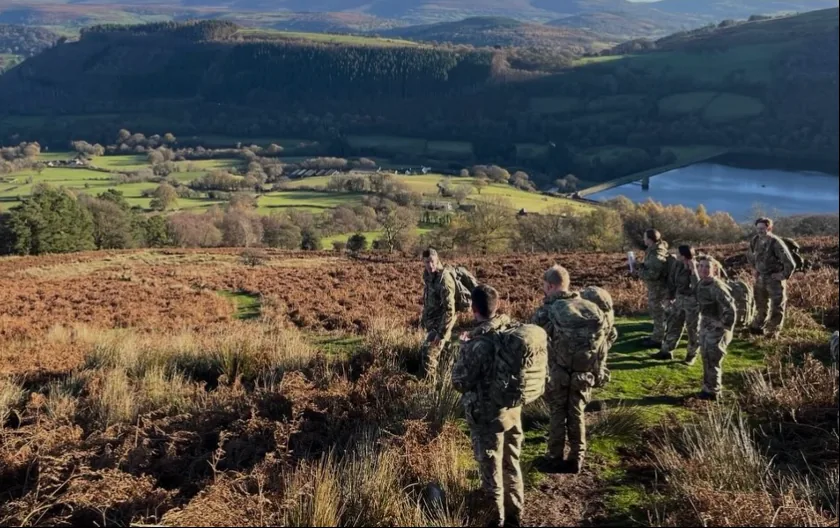
You've probably dreamed of leading soldiers in the most challenging of operational environments. You've imagined yourself commanding a platoon, making decisions under pressure, and earning the trust of the soldiers you lead. But between you and that future stands one final hurdle: AOSB Main Board.
Approximately 57% of candidates who sit Main Board will pass. The other 43% will not. The difference between these two groups rarely comes down to natural ability. It comes down to preparation, self-awareness, and understanding what the assessment actually requires.
In this guide, I will set out everything you need to know to make sure you become part of that 57%, rather than the 43%. I will cover what Main Board involves, how assessors evaluate you, what each assessment requires, and insights on what separate those who pass from those who do not.
Before we begin, I want to be clear on one thing. Success is not about gaming the system. The assessment is far too wide-ranging and difficult for that. But by arming yourself with knowledge of the process as early as possible, you give yourself the best possible launch pad for success. The rest is up to you. Hard work and serious preparation are non-negotiable.
What is AOSB Main Board?
AOSB Main Board is where it all comes together. Four days at the Army Officer Selection Board centre in Westbury. One chance to prove you have what it takes to lead soldiers. Only candidates who have already passed Briefing are invited to attend, and by the time you leave, your future will no longer be in your hands.
If Briefing felt supportive, Main Board will feel very different. The developmental tone is gone. Your assessing officer will be deliberately distant. Not out of coldness, but because they need to evaluate you objectively without rapport clouding their judgement. The tasks are harder, the planning exercises are more complex, and the interviews are more probing.
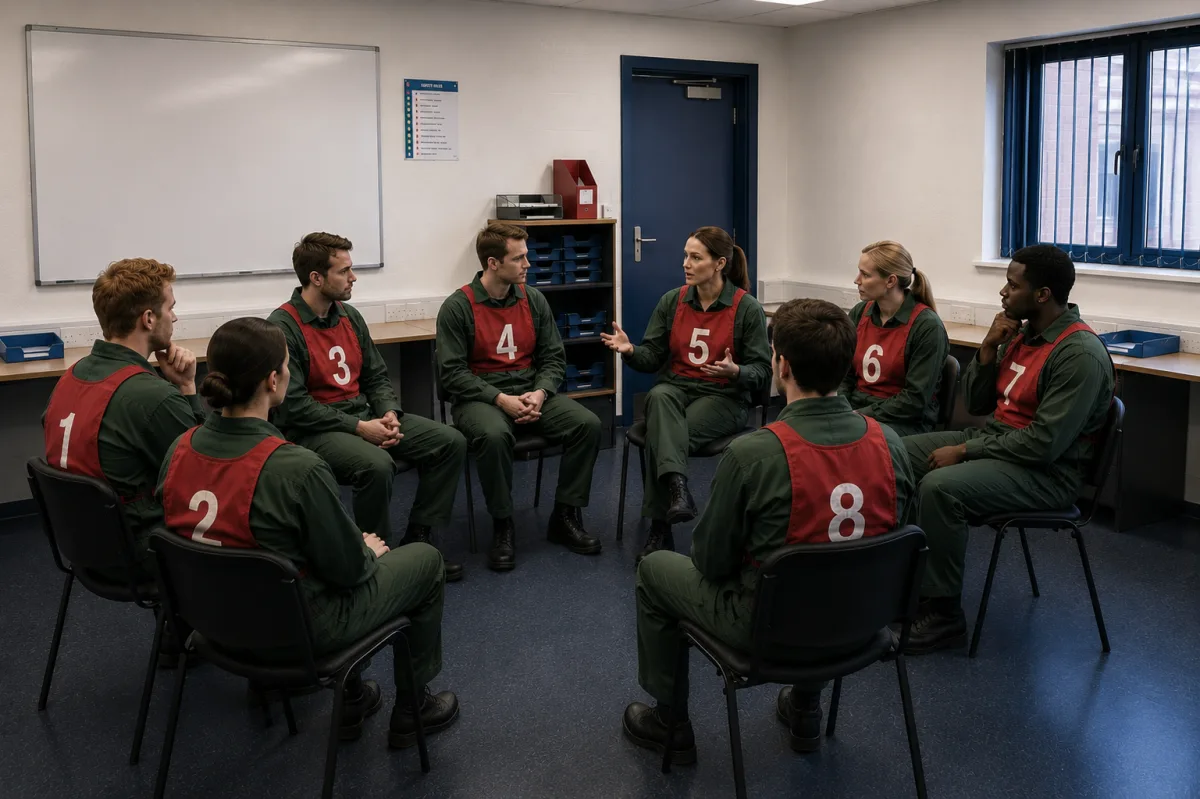
You will spend those four days with a syndicate of around eight candidates, working through assessment after assessment designed to test your leadership, judgement, resilience, and ability to perform when it matters most.
How You Are Assessed
You are applying to become a British Army officer. The range of skills this requires is broader than perhaps any other career. You need to be smart enough to process information rapidly and make decisions, often with serious consequences and no easy answer. You need to be resilient enough to do this under extreme pressure, often with little sleep. You need to be fit. Very fit. You need to be confident enough to stand in front of experienced soldiers and convince them that your plan will work. The list is nearly endless.
This is why Main Board tests you across so many areas. Assessors want to see how you handle difficulty in your command task. They want to know how clearly you communicate in writing. They want to observe how you respond when a group discussion turns against you. In combination, these assessments build a complete picture of your suitability for officer training. Everything matters.
The assessments are designed to reveal whether you possess the following officer qualities:
- Intellect: The ability to think clearly, analyse information, and solve problems under pressure.
- Communication: Expressing yourself with clarity and confidence, both verbally and in writing.
- Leadership: Taking charge when required, directing others effectively, and accepting responsibility.
- Teamwork: Working constructively with others, supporting the group, and putting collective goals first.
- Performance Under Pressure: Maintaining composure and determination when things become difficult.
- Motivation: Demonstrating genuine commitment to becoming a British Army officer.
- Values and Standards: Conducting yourself appropriately throughout. How you behave between assessments matters as much as how you perform during them.
A strong performance in one area may offset a weaker one, but assessors are looking for candidates who perform well across the board. You are being assessed from the moment you arrive until the moment you leave.
At the end of the week, assessors sit down and discuss each candidate. You will be given a score in each assessment, and these scores combine to produce one overall mark. If you're above the pass mark, you pass. If you're below it, you fail. And if you're borderline, you may have a choice to make. More on this later.
Running Order
Main Board runs across four days, although you will depart early on Day 4,. The table below shows what happens on each day. Each assessment is explained in detail in the following section. You can find up to date information on the running order of the assessments at the British Army's official AOSB page.
| Day | Activity |
|---|---|
| 1 | Introductory Talk, Psychometric Tests, Essay, Bleep Test |
| 2 | Leaderless Tasks, Group Discussion, Interview, Planning Exercise Tutorial |
| 3 | Lecturette, Planning Exercise, Command Task, Obstacle Course, Formal Dinner |
| 4 | Final Group Command Task |
Day 3 ends with a formal dinner in the mess. It is your first chance to relax a little, but don't forget that you are still at a job interview. The final group command task, on Day 4, is as much a rite of passage as it is a real assessment, though you should treat it seriously. It takes place early in the morning and lasts for about 5 minutes. It is your final chance to remind the board of how determined you are to become a British Army officer.
The Assessments
Now that you understand how you are assessed, it is time to understand the assessments themselves. Main Board comprises nine distinct assessment types. Each provides assessors with different evidence of your suitability for commissioned service.
Psychometric Tests
You complete three timed, computer-based psychometric tests covering verbal, numerical, and abstract reasoning. You also undertake a memory & attention (MAT) test and a personality test. These assessments measure your raw intellectual capacity and your ability to solve logical problems under time pressure. The format is the same at Briefing and Main Board, so the practice you put in ahead of Briefing serves you twice.
What Assessors Are Looking For
- ✓Calm Under Pressure: The ability to think clearly and logically when time is limited.
- ✓Consistent Accuracy: Maintaining precision across verbal, numerical, and abstract reasoning tasks.
- ✓Focused Execution: Working efficiently through the questions without overthinking.
Strategy for Success
- ✓Simulate Test Conditions: Practice against the clock using questions that are as close as possible to those you will be answering.
- ✓Manage Your Time: If you get stuck, move on and return later. Guessing carries no penalty.
- ✓Sharpen Mental Maths: Practice speed, distance, and time calculations until they become automatic.
Physical Assessments
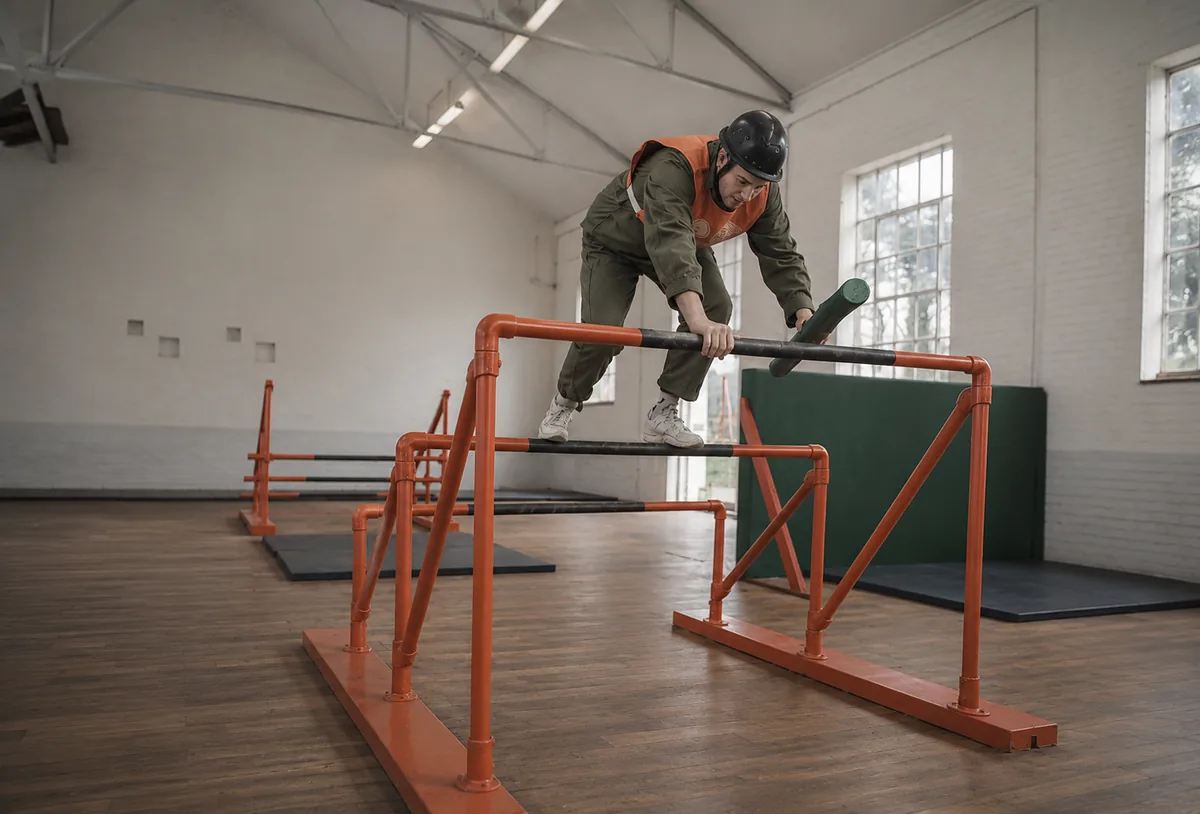
You will complete the bleep test, for which you must score at least 7.10, and a demanding individual obstacle course.
What Assessors Are Looking For
- ✓Determination: Giving maximum effort during every test, from start to finish.
- ✓Disciplined Preparation: Evidence of a structured, consistent training regime before arrival.
- ✓All-Round Fitness: Balanced strength, endurance, and cardiovascular ability suited to Sandhurst demands.
Strategy for Success
- ✓Start Early: Begin a structured programme as early as possible. Fitness takes time to develop.
- ✓Follow a Balanced Programme: Combine strength, bodyweight exercises, and cardiovascular training consistently.
- ✓Train Beyond the Minimum: The published standards are a baseline, not a target.
Group Discussion
You take part in a thirty-minute discussion with your syndicate on various current affairs topics while assessors observe your engagement and communication. I've put together a detailed guide to the AOSB group discussion that breaks down exactly what this assessment involves.
What Assessors Are Looking For
- ✓Clear Articulation: Expressing your thoughts calmly and concisely so others can follow your reasoning.
- ✓Analytical Thinking: Viewing issues from multiple perspectives and reaching balanced conclusions.
- ✓Respectful Disagreement: Challenging others politely while remaining open to their points.
- ✓Active Listening: Responding thoughtfully to others' contributions and building on their ideas.
Strategy for Success
- ✓Build Awareness Early: Develop an understanding of current affairs through consistent study, as it takes time to develop. My current affairs guide for AOSB explains where to start.
- ✓Practice Makes Perfect: Knowledge alone is not enough. Only with real discussion practice will you become better at articulating what you know clearly.
- ✓Use Concrete Examples: Always support your points with specific references to current events.
Leaderless Tasks
Your syndicate attempts to solve a series of practical problem-solving challenges on an outdoor obstacle course, involving items such as planks of wood and rope. No leader is appointed.
What Assessors Are Looking For
- ✓Consistent Contribution: Making regular, useful input without dominating the group.
- ✓Active Listening: Paying attention to teammates and responding to their suggestions.
- ✓Resilience Under Pressure: Staying positive and encouraging others when the task isn't going to plan.
Strategy for Success
- ✓Balance Assertion and Collaboration: Influence the group without taking over or becoming overbearing.
- ✓Support Quieter Teammates: Help others contribute rather than sidelining them.
- ✓Maintain Energy Throughout: Keep enthusiasm high from start to finish, especially if the task isn't going to plan.
Command Tasks
You lead your syndicate through a short physical task on the obstacle course. You have a few minutes to plan your approach before using equipment to achieve a set goal. This is the only time you are observed as the designated leader.
What Assessors Are Looking For
- ✓Directive Leadership: Taking clear command from the outset and maintaining control throughout.
- ✓Rapid Planning: Reaching a sensible, workable solution quickly without overcomplicating things.
- ✓Controlled Urgency: Maintaining appropriate pace without appearing panicked or flustered.
Strategy for Success
- ✓Encourage Your Team: Keep morale high with clear direction and positive reinforcement.
- ✓Appoint a Timekeeper: Delegate time management so you can focus on leading the task.
- ✓Finish Strong: Keep going until the last second, especially if the plan has not succeeded. Assessors notice how you handle adversity.
Planning Exercise
You receive a written scenario involving time and resource constraints and then develop a plan. This is followed by a group discussion where you reach an agreed solution, and an individual brief where you present your plan to your assessing officer.
What Assessors Are Looking For
- ✓Composure Under Pressure: Remaining calm when questioned by the assessor on your plan.
- ✓Sound Judgement: Producing a workable plan that prioritises objectives and manages limited resources.
- ✓Confident Delivery: Briefing your plan clearly and with authority when called upon.
Strategy for Success
- ✓Master Speed-Distance-Time: Practice answering SDT calculations in a written format, while also getting used to responding to spoken SDT questions.
- ✓Rehearse the Format: Complete as many planning exercises as possible, including delivering briefs aloud.
- ✓Accept Imperfection: Aim for a plan that is good enough. A perfect plan is almost impossible in the time limit.
Download Your Free AOSB Preparation Guide
Get the complete 34-page guide delivered straight to your inbox.
Lecturette
You prepare and deliver a five-minute talk on a topic chosen from your CV, followed by a short period answering questions from the syndicate and the assessor.
What Assessors Are Looking For
- ✓Engaging Delivery: Holding the audience's attention with energy and natural presence.
- ✓Relaxed Authority: Speaking with confidence without appearing rigid or over-rehearsed.
- ✓Structured Clarity: Presenting ideas in a logical order that is easy to follow.
Strategy for Success
- ✓Use a Simple Structure: Introduction, three main points, and a firm conclusion works every time.
- ✓Know Your CV: Review your experiences beforehand and have stories ready to draw upon.
- ✓Avoid Over-Memorising: Familiarity with your material is better than a rigid, rehearsed script.
Essay
You have forty-five minutes to write a handwritten essay on a topic chosen from a provided list. The task requires you to organise your thoughts and present a coherent, balanced argument. I've written a separate guide to the AOSB essay that walks you through exactly how to approach it.
What Assessors Are Looking For
- ✓Logical Argument: A clear, coherent line of reasoning from introduction to conclusion.
- ✓Balanced Analysis: Considering both sides of the issue before reaching your position.
- ✓Readable Presentation: Legible handwriting with proper punctuation and grammar throughout.
Strategy for Success
- ✓Plan Before Writing: Spend five minutes structuring your argument. It will save time overall.
- ✓Use a Reliable Structure: Have a trusted format that allows you to present balanced arguments.
- ✓Write Clearly and Simply: Forty-five minutes is short. Clarity beats complexity every time.
Interviews
You will attend three formal interviews: one with the Board Vice-President covering your motivation for joining the Army, your values, and your understanding of officer life; one with an education adviser focusing on your academic history and intellectual potential; and one with another officer built around your CV, so be prepared to talk through anything you have written on it. Each lasts around 20 minutes. Although written for the initial officer interview, my interview preparation guide covers the same core skills and question types you will face at Main Board.
What Assessors Are Looking For
- ✓Authentic Motivation: A genuine, unscripted understanding of Army life and your reasons for joining.
- ✓Intellectual Composure: The ability to provide structured, logical reasoning even when challenged.
- ✓Humility: Balanced self-awareness and the ability to reflect openly on past mistakes.
Strategy for Success
- ✓Prioritise Authenticity: Natural conviction carries more weight than a polished, rehearsed script.
- ✓Master Etiquette: Use correct titles (Sir/Ma'am) and wait to be seated. Small courtesies matter.
- ✓Use the STAR Technique: Structure your answers using Situation, Task, Action, and Result to provide clear, compelling examples of your experiences.
Pass Rate
If you've reached Main Board, the Army has already recognised that you are a serious candidate with officer potential. However, the final hurdle must still be crossed. In 2024, out of 1,021 candidates who reached Main Board, 581 (57%) passed and 440 (43%) failed.
They say a picture speaks a thousand words, so instead of writing any more, I will let you take in the numbers below.
Based on British Army figures released under Freedom of Information, 2024.
You've already defied the odds in getting to Main Board, though that's little consolation if you fail. Treat the statistics as a reminder that the process is rigorous, and that those who succeed are those who take it seriously.
Your Result
Within a few days of leaving Westbury, you will receive a letter that determines your fate. This letter will contain one of three outcomes, each of which is explained below.
If You Pass
If you pass, you'll be offered a place at the Royal Military Academy Sandhurst. Background checks will be carried out, but these are routine and nothing to worry about. Places on each intake are allocated first-come-first-served, and there are three intakes per year: January, May, and September.
If You're Borderline
Some candidates are not given a straightforward pass or fail. Instead, they may be recommended for additional development before attending Sandhurst. A course exists for this purpose, and many candidates won't have heard of it prior to receiving the offer. If it is recommended to you, treat it as an opportunity rather than a setback.
That course is the Pre-Royal Military Academy Sandhurst Course (PRAMS), which runs for 12 weeks at Worthy Down Camp in Winchester. Each course takes around 30 potential officers and ends with an assessment. The pass rate is high, typically between 90% and 100%, so the assessment is far less daunting than it sounds.
While you may initially feel discouraged if you are offered a place on the course, an extra 12 weeks is a small price to pay for a career as a British Army officer. In fact, many attendees later recall these 12 weeks as having been one of the most rewarding periods of their entire military career.
I've written a separate guide to decoding a PRAMS offer that explains what to expect from the course and how to read your offer letter.
If You Don't Pass
If you are unsuccessful, you'll receive a report explaining how you performed and where you fell short. This doesn't have to be the end of the road, as you're entitled to two attempts at Main Board. Future assessors won't hold a previous attempt against you.
On the contrary, they will be impressed by your determination. They are aware that many candidates attend Main Board at an age where a few years of extra development can make a big difference to AOSB performance.
The board is looking for potential, but it's also looking for people who are ready for Sandhurst. If you weren't quite there on your first attempt, a year or two of development can make a real difference. Anecdotally, returners have a higher pass rate than first-time candidates.
Frequently Asked Questions
What is the Main Board pass rate?
Approximately 57%. In 2024, out of 1,021 candidates who reached Main Board, 581 passed and 440 failed. The difference between the two groups rarely comes down to natural ability. It comes down to preparation, self-awareness, and understanding what the assessment actually requires.
How long does Main Board last?
Main Board runs across four days at Westbury. You will arrive on Tuesday morning, and depart at around midday on the Friday. Your assessments are spread across those four days, and on the Thursday evening you will attend a formal dinner.
What happens after I pass Main Board?
You will be offered a place at the Royal Military Academy Sandhurst. Places on each intake are allocated on a first-come-first-served basis, and there are three intakes per year, in January, May, and September.
How long does a Main Board pass last for?
5 years, though you must start the commissioning course before your 29th birthday. This gives you time to finish your degree or go travelling after you get your Main Board pass, safe in the knowledge that you have a place at Sandhurst waiting for you when you are ready to start.
How many attempts at Main Board do I get?
You are entitled to two attempts, though you must wait a minimum period before the second. Typically, this is one year. Anecdotally, returners have a higher pass rate than first-time candidates, so if you want a second crack at it, take it.
Does my first attempt affect how I am marked the second time?
Westbury works hard to stop preconceptions carrying over. You are never marked by the same DS twice, and they are not shown your first-attempt feedback until your new scores are finalised. Only then is the comparison made, to check you have worked on the areas marked below standard.
Final Thoughts
Main Board is demanding by design. The British Army needs officers who can perform under pressure, lead in challenging circumstances, and demonstrate consistent character regardless of conditions. Main Board replicates some of those pressures to identify those with genuine potential.
The process is not a mystery. The assessments are structured, the qualities being measured are clear, and the path has been walked by thousands before you. Those who prepare seriously and consistently give themselves the best possible chance of success.
If this is the career you want, commit to it fully. Prepare with purpose, approach each stage with professionalism and humility, and remember that the board is not looking for perfection. It is looking for potential, and for evidence that you have the character to develop it.
Ready to Begin Your Prep?
Officer Ready gives you everything you need to arrive at Westbury prepared. Psychometric test practice, planning exercises, and expert guidance from a former British Army officer. Built on the methods the Army uses to develop its own leaders.
Start Preparing