Key Takeaways
In this article I will cover:
- A Stepping Stone, Not a Setback: Being offered a place on PRAMS is not a failure. It means the Board has identified genuine officer potential in you, but simply wants to provide additional time for development before Sandhurst.
- PRAMS: Aimed at candidates with clear potential who require wider cultural and personal development. A 12-week course at Worthy Down. It is highly focused on rounding out your skills and setting you up for success at Sandhurst.
- The Clean Slate at Sandhurst: Attending the course will not negatively impact your career or the RSBs. Everyone starts on an equal footing on ironing board Sunday.
- Embracing the Opportunity: While opening a borderline letter can initially feel discouraging, the course is a highly rewarding final hurdle. An extra 12 weeks of preparation is a small price to pay for a career as a British Army officer.
Imagine that you've spent the last few days waiting anxiously for your Main Board result. You feel like you performed well, but you know there were some areas where you could have done slightly better.
At last, your letter has arrived and you open it with a mixture of excitement and fear. But as you start reading, this feeling gives way to confusion. You realise that you've been invited to a development course you've never heard of and, only if you pass an end-of-course assessment, is a place at Sandhurst yours.
You have no idea what to feel. The Army wants you. Sort of. And it's certainly not a no. But it's definitely not the news you were hoping for. It's natural to feel disheartened at this point, even if things could have gone a lot worse.
It's an experience that many AOSB applicants have gone through in the past, and many will go through in the future. But there's very little written about it. Many candidates may not even have heard of the course until they get to Main Board.
While the British Army's website is clear on what happens at Main Board, it says very little about what happens next. In this article, I've attempted to reduce the mystery. I will describe the course that borderline candidates are sent on, why certain candidates are chosen to attend, what happens on it, and what it means for your career.
Who Ends Up on the Course?
As you progress through each assessment at Main Board, the DS are building a comprehensive understanding of your suitability for a career as a British Army Officer.
You are assessed in many different areas, such as intellect, performance under pressure, ability to influence a group, fitness, and more. By the end of the four days, the Board has a strong impression of you, but no decision has yet been made.
It is not until the Board convenes, once the candidates have departed, that final decisions are made. At this point, the Board discusses each individual candidate.
There will be those who have met or exceeded the standard in every category. The decision here is easy: Main Board pass. There will also be those who have very obviously fallen short in a number of areas. Again, the decision is easy: fail.
However, the process is not black and white for all. Some candidates will be borderline. While each candidate is, of course, unique, there is a common theme. These are candidates who the Board deems to have clear officer potential, but it thinks they require additional development before attending the commissioning course.
These candidates can find themselves invited for further development prior to, potentially, attending Sandhurst proper. One course exists for this purpose, and it is described in full below.
The Pre-Royal Military Academy Sandhurst Course
The pre-Royal Military Academy Sandhurst course is better known as PRAMS. It is designed for candidates who the Board deems to have clear officer potential but who require broader development before beginning the commissioning course.
It is expected, though not guaranteed, that all course attendees will begin the commissioning course. Often, attendees are young and have applied to the Army without going to university. This is often the reason that they require a little more development and maturity before attending the commissioning course.
The cohort is a mixture of two groups. Around half of the attendees are those who have already undertaken Main Board and been placed on the course. This is the PRAMS course. The other half are serving soldiers, who have been identified as having officer potential. For them, the course is designed to prepare them for Main Board, which they have not yet passed.
Technically, the serving soldiers are on a separate course, called the Potential Officer Development (POD) Course. However, in reality it is one course made up of these two groups. The only difference is what happens afterwards. For this reason, the course is better known either as PODS and PRAMS, or just PODP.
PODP is a 12-week course held at Worthy Down Camp, just north of Winchester. The atmosphere is focused on self-development, and the course staff (all ETS officers) are genuinely invested in helping you improve.
The course covers a wide range of activities designed to develop you as a potential officer. They include:
- Cultural trips: Visits to London, Oxford, Portsmouth, and Winchester covering politics, art, religion, and history.
- Presentations: Regular five-minute presentations to build confidence, delivery, and analytical skills.
- Dartmoor week: A week of walking and navigation on Dartmoor.
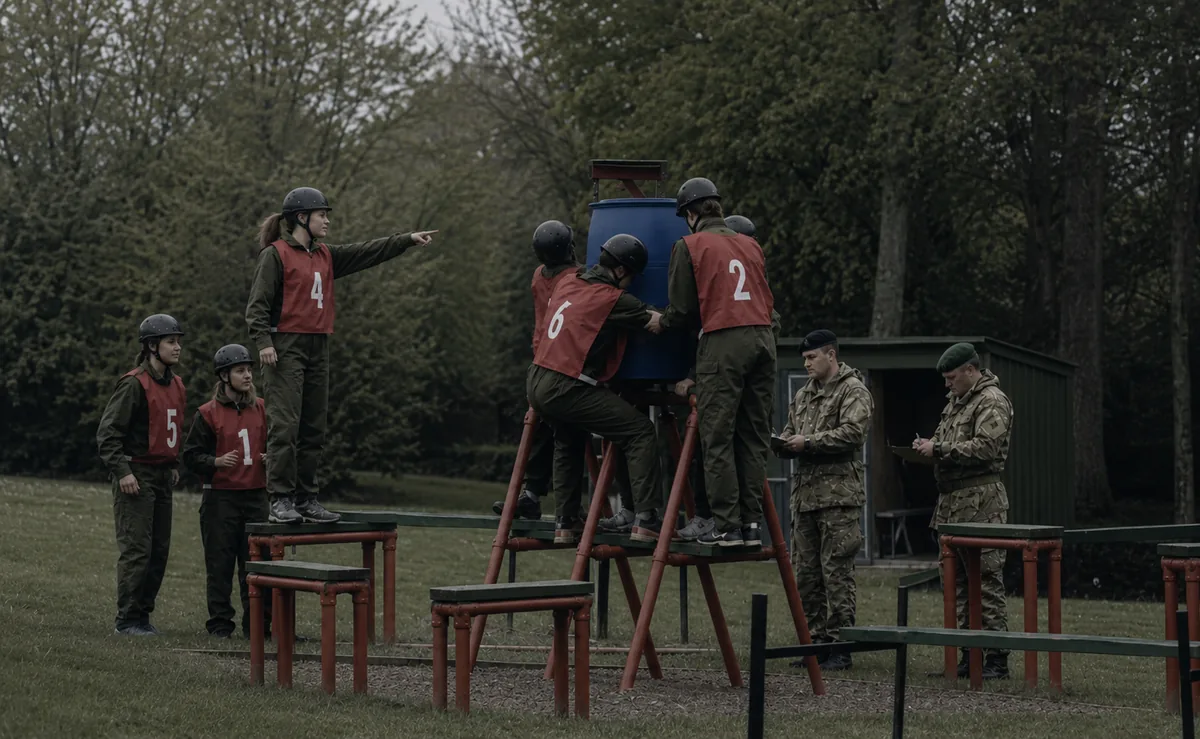
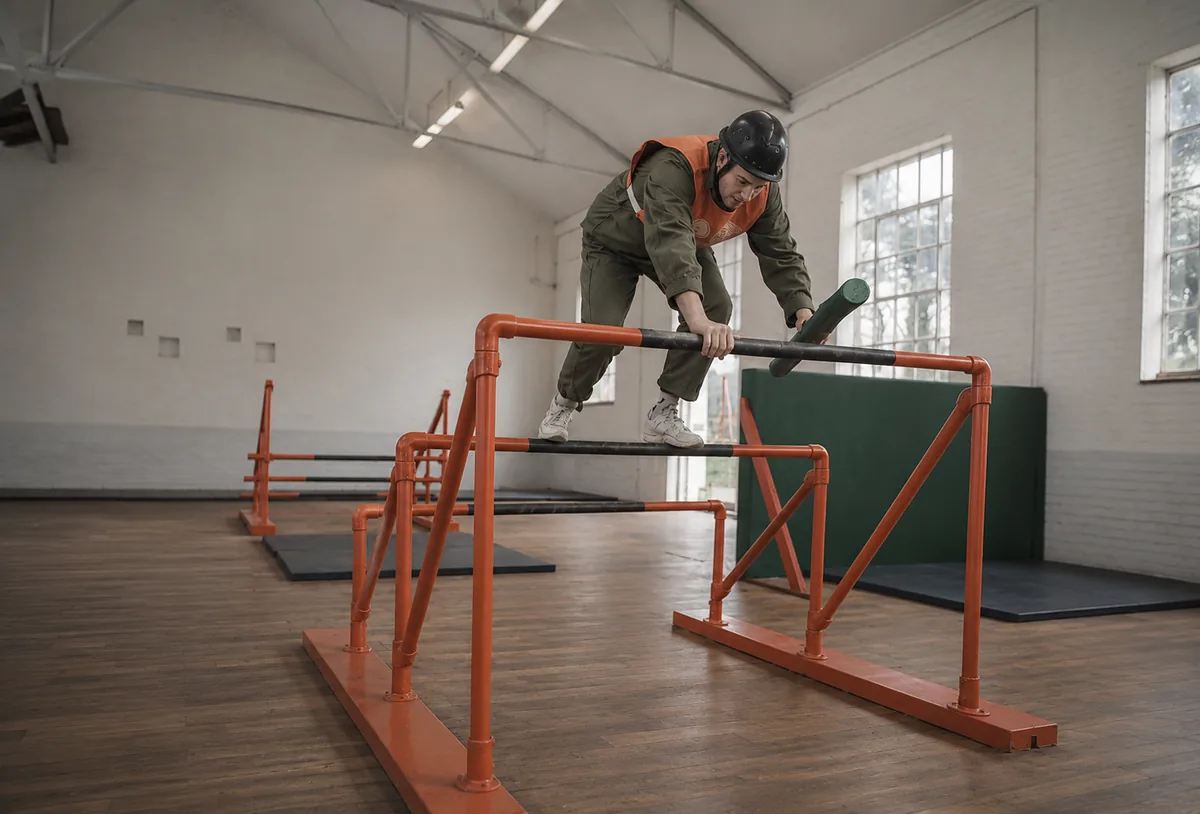
- PT: Around 3 sessions per week, including Battle PT with stretcher carries, leopard crawls, and the obstacle course.
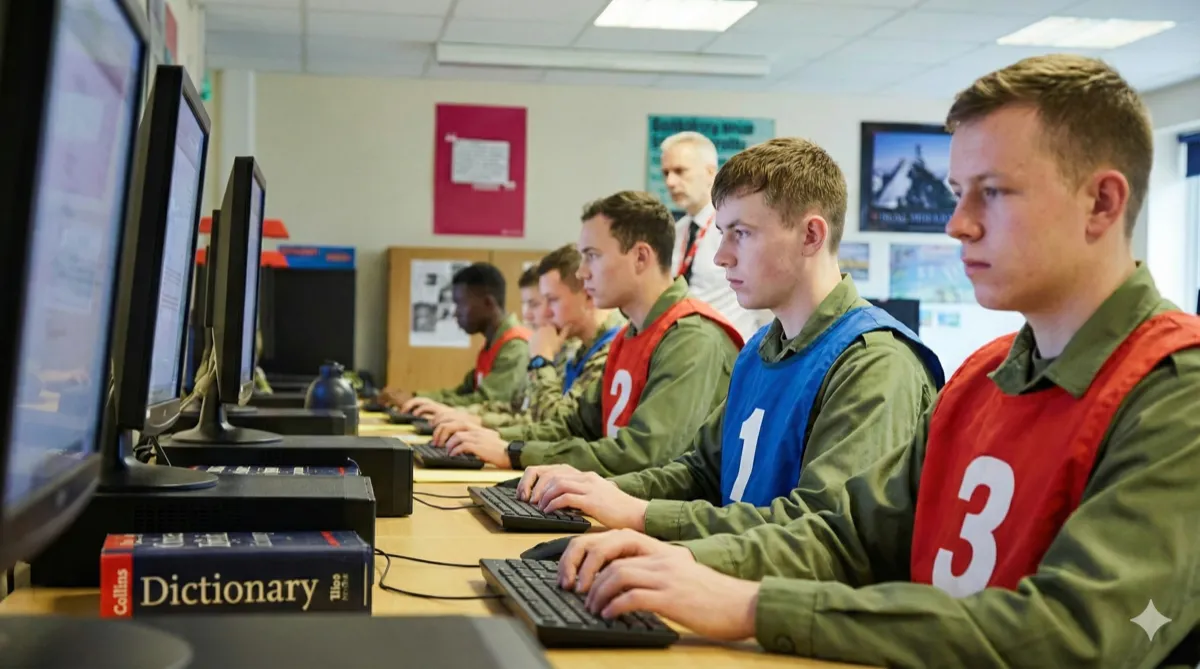
- Current affairs: Weekly newspaper tests and speed-distance-time assessments.
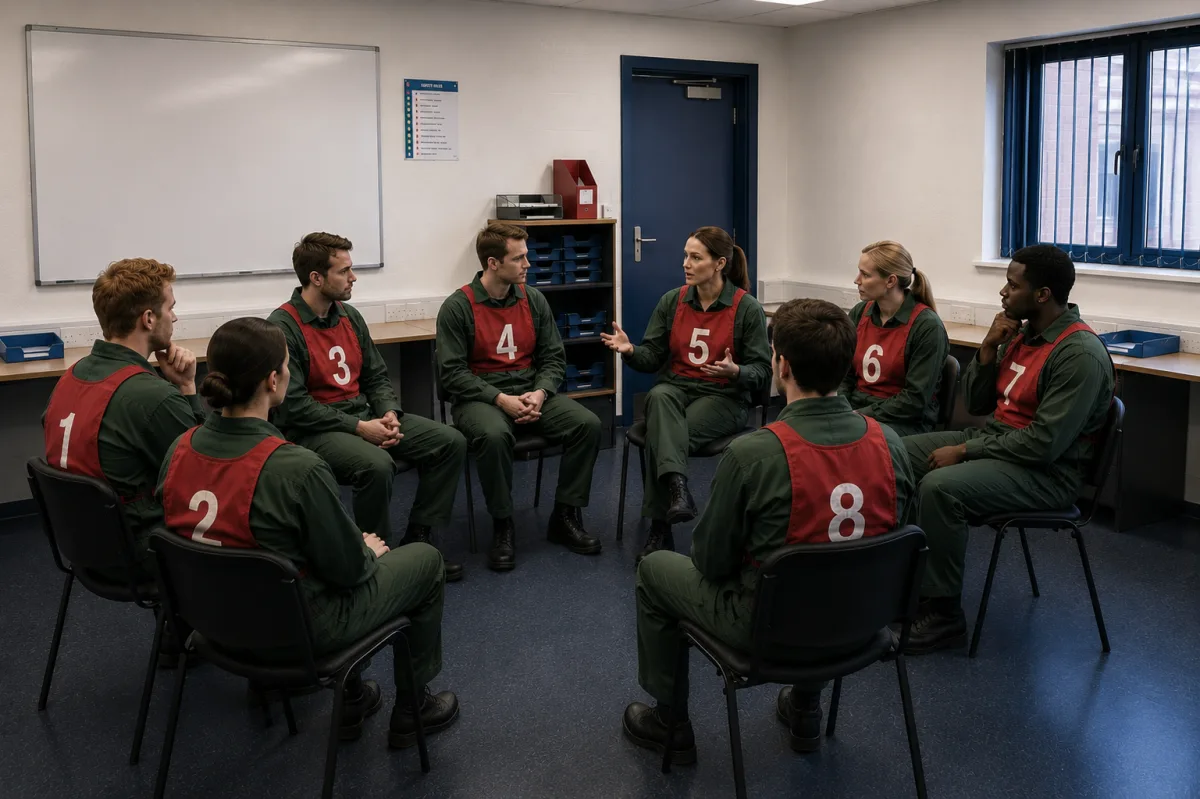
- Defence and international affairs: Group discussions, planning exercises, and command tasks.
- Assessed presentation: A 15-minute presentation on a topic relevant to UK security, delivered near the end of the course.
At the end of the course, the final assessment is a Sandhurst Entry Board. Here, you present your progress over the 12 weeks to a panel including representatives from the Army School of Education, Sandhurst, and AOSB. Unless something has gone seriously wrong on the course, all candidates should pass. Pass rates typically sit between 90% and 100%.
A more detailed description of what happens on the course can be found on this post, which was written by a former PODP attendee.
Download Your Free AOSB Preparation Guide
Get the complete 34-page guide delivered straight to your inbox.
What It Means for Your Career
It is natural to worry when you first realise that you've been offered a place on the course. For those who don't know the system, they might assume that it will negatively impact how regiments look at you. But, in reality, it has very little impact on things.
Everyone turns up on Ironing Board Sunday (Sandhurst day 1) in the same position. Everything is to play for. By the time you reach the RSBs, your chosen regiments will know exactly how you've fared across junior and senior terms. This is a far better indicator of your potential than four days at Main Board.
I know many excellent officers who have attended the course and who went on to have, and continue to have, excellent careers. Here are just a few regiments where course attendees from my intake went. No doubt they went to other regiments, but these are all individuals I know personally:
- Paras
- Royal Hussars
- Scots Guards
- Royal Engineers
- Royal Artillery
- Royal Signals
- AGC
- The Duke of Lancaster's Regiment
- RLC
These are just the individuals from one intake I can think of, off the top of my head. In other words, they go pretty much everywhere. You'd find it difficult to find a regiment that hasn't taken on somebody who attended the course.
You should view the course as an opportunity. It is a final 12-week hurdle to be cleared before going to Sandhurst. It is a small price to pay for a career as a British Army officer.
Frequently Asked Questions
What is the PRAMS course?
PRAMS is the Pre-Royal Military Academy Sandhurst course. It is offered to borderline Main Board candidates who the Board deems to have clear officer potential but who require broader development before beginning the commissioning course. Pass the end-of-course assessment and a place at Sandhurst is yours.
How long is PRAMS and where is it held?
PRAMS is a 12-week course held at Worthy Down Camp, just north of Winchester. The course staff are all ETS officers and the atmosphere is focused on self-development, with cultural trips, presentations, PT, current affairs tests, and more.
What is the PRAMS pass rate?
Pass rates at the final Sandhurst Entry Board typically sit between 90% and 100%. Unless something has gone seriously wrong on the course, all candidates should pass and go on to begin the commissioning course.
Will attending PRAMS affect regimental selection?
No. Everyone starts Sandhurst on an equal footing, and by the time you reach the Regimental Selection Boards your chosen regiments will judge you on your performance across the commissioning course. By the time the RSB interviews come round, Main Board is a distant memory.
Final Thoughts
Being offered a place on the course can feel like a setback in the moment. It isn't. It's the Army telling you that you have what it takes, but you need more time to develop. This is only a positive.
While you may initially feel discouraged, an extra 12 weeks is a small price to pay for a career as a British Army officer. In fact, many officers I know recall these 12 weeks as some of the most rewarding of their entire military careers.
That letter you opened with a sinking feeling? It might just be the best thing that could have happened to your career.
Ready to Begin Your Prep?
Officer Ready gives you everything you need to arrive at Westbury prepared. Psychometric test practice, planning exercises, and expert guidance from a former British Army officer. Built on the methods the Army uses to develop its own leaders.
Start Preparing