Key Takeaways
In this article I will cover:
- The Format: Three terms of 14 weeks, known as Juniors, Inters and Seniors, with three intakes a year in January, May and September.
- The 26-Week Job Interview: Regiments judge you from the moment you arrive. Your declaration of interest goes in at week 9, and the RSB process decides your future home.
- How to Arrive Prepared: Fitness and map reading are the two things you can genuinely train before day one, and roughly half of your intake will arrive with a head start.
- How You Can Earn a Degree: Every cadet leaves with 120 credits, and the Army then funds a full BSc or MSc in Leadership and Strategic Studies while you serve.
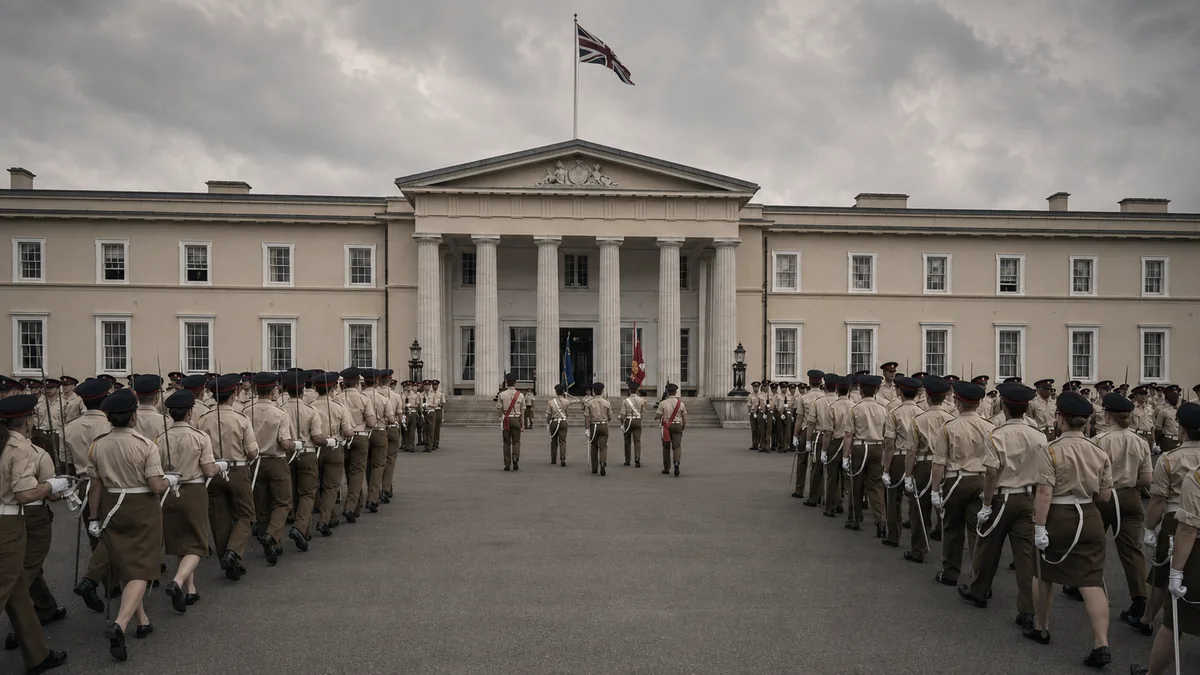
On your first day of the commissioning course, you will walk up the Old College steps with your ironing board in hand. Every cadet has one, and it's why the day is known as Ironing Board Sunday.
The next time you walk up those steps will be on the day of your commissioning parade. You don't need me to tell you that a lot will happen in between.
Not least the infamous first 5 weeks. They will almost certainly be the longest and most difficult five weeks of your life to date. There will be lots of early starts and even more hard work.
In this guide, I will set out how the commissioning course works. It certainly won't be comprehensive. That would be impossible. But it will give you a baseline understanding for what happens over the 44 weeks.
The Basics
The Royal Military Academy Sandhurst is where every officer in the British Army is trained, and the Regular Commissioning Course exists to turn you into an officer capable of leading soldiers in the most demanding of environments. Everything at the Academy is built around that single output. Its reputation extends well beyond Britain, and Sandhurst has trained numerous heads of state and heads of government. Since 1947, more than 5,000 overseas officers from 131 countries have passed through its gates.
There are three intakes a year, in January, May and September. Each intake is around 270 officer cadets, split evenly into three companies of about 90, each containing three platoons. You will live at the Academy throughout, first in Old College and later in New College.
The course itself is divided into three terms of 14 weeks each, with a period of leave between them. The training is progressive, and each term assumes you have mastered the previous one. The standard expected of you rises accordingly.
Turns you from a civilian into a soldier and teaches you the fundamentals of British Army leadership.
Develops your ability to lead and pushes you to your limits in command appointments in the field.
Increases the complexity again and transforms you from a competent leader into a credible officer.
If you are wondering what Sandhurst is actually like day to day, the honest answer is that it depends on the term. The rest of this guide walks through each one in turn.
Juniors (Weeks 1 to 14)
It is inevitable that you will arrive on Ironing Board Sunday with nerves. You will immediately be placed in your platoon and move into Old College. The next few weeks will be a blur, and some of the most challenging of your life. Your instruction will be led by your Platoon Colour Sergeant, and they will be at the top of their game.
This term requires rapid adaptation, and its milestones come thick and fast:
- Weeks 1 to 5. Early starts, late finishes and daily room inspections. These weeks are infamous and extremely challenging.
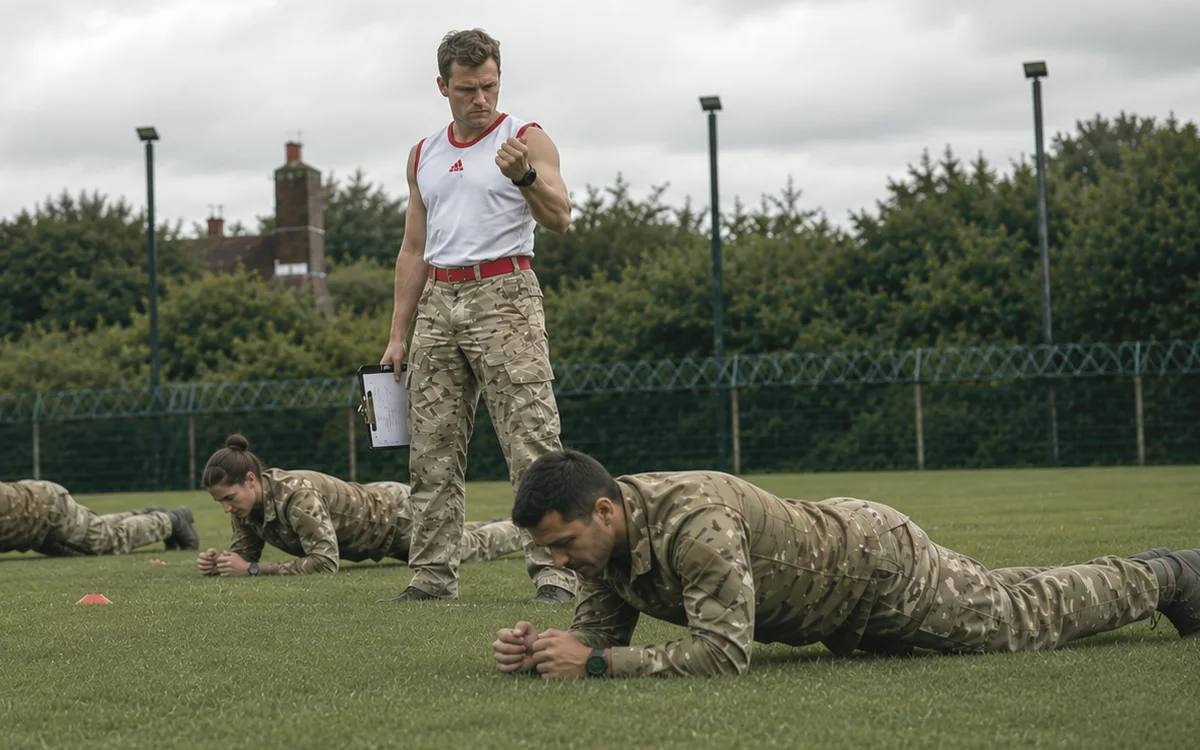
- Role Fitness Test. Your fitness is formally tested from the start, and if you arrive below the standard you start the course on the back foot.
- Weapons Handling. You will learn to strip, clean, maintain and fire your rifle, and must pass formal handling tests.
- Arms & Services Displays. Each regiment and corps displays its role and equipment, giving you a detailed look at potential cap badges.
- Passing Off the Square. Pass the drill inspection and you earn the privilege of leaving the Academy for the first time.
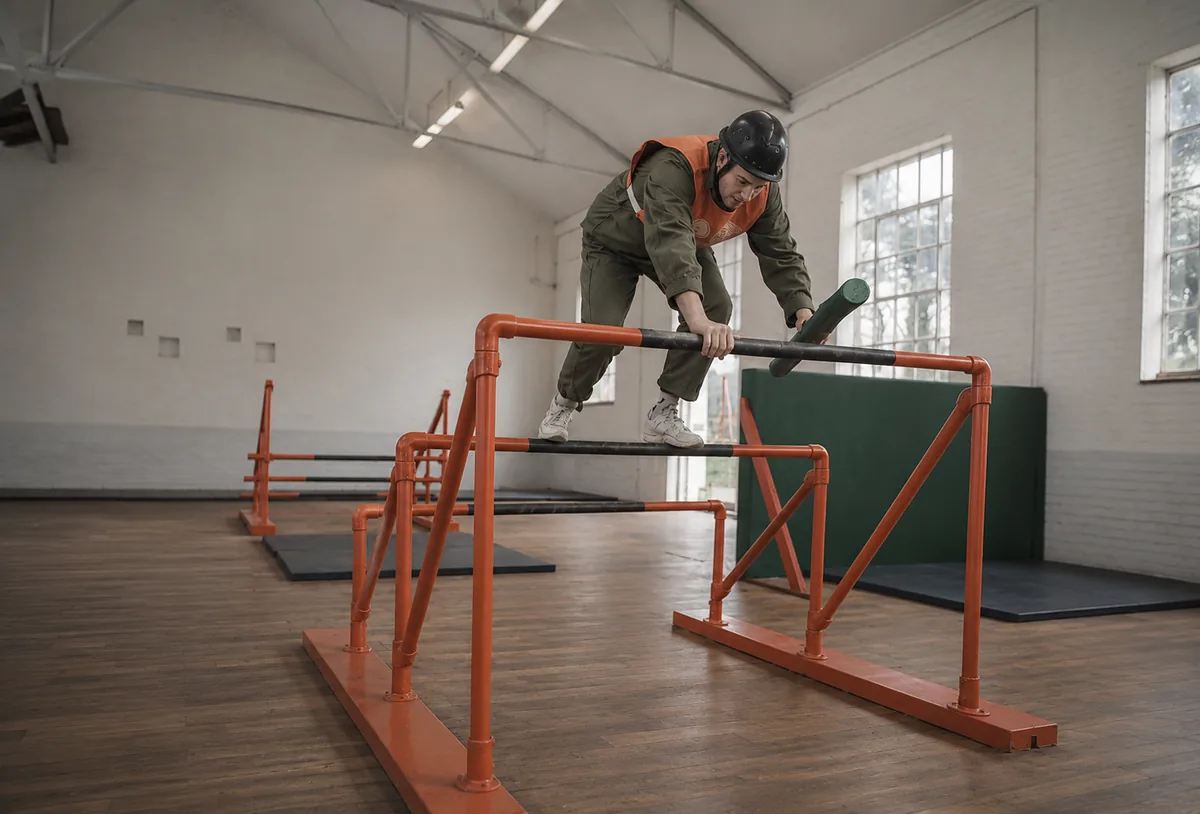
- Green Skills. The fundamental skills of living and fighting in the field, from live firing on the ranges to navigation exercises by day and night.
- Military Tactics. You learn to plan and deliver orders, then put them into practice on the ground through section and platoon attacks.
- Ex LONG REACH. You will tab for 30 to 40 hours in sections through the Brecon Beacons, completing command tasks as you go.
- Declaration of Interest. You will formally declare which regiments you are interested in joining, and the selection process begins in earnest.
By the end of Juniors, you are a competent soldier and probably fitter than you have ever been. You have narrowed your choice of cap badge to two and one of them, you hope, will become your future regimental home.
Inters (Weeks 15 to 28)
You will return for Inters with tempered excitement, knowing that a huge amount of hard work lies ahead of you. You will move into New College and probably receive a new Colour Sergeant. The Regimental Selection Board, a defining moment in your career, looms large.
This term is just as challenging as Juniors, though by now you are accustomed to the speed of Academy life. It includes:
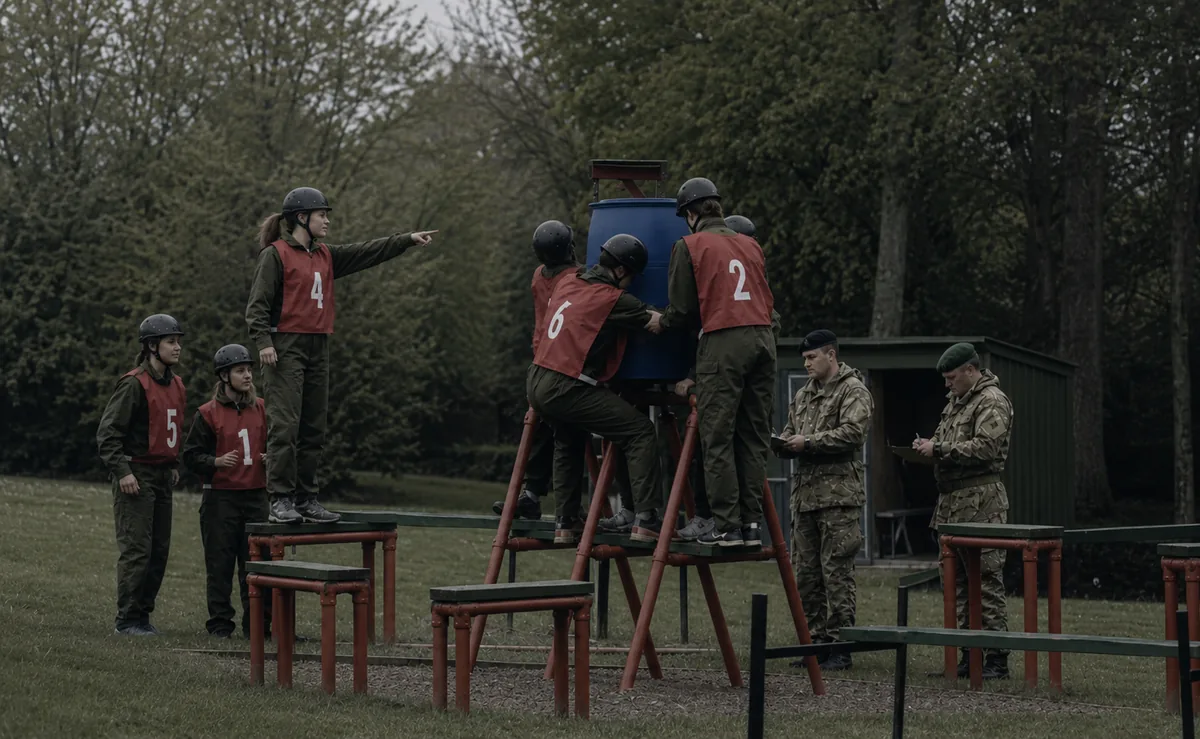
- Command Appointments. You will rotate through the leadership positions of the platoon, with the DS assessing your every decision.
- Offensive Operations. You will plan and lead deliberate attacks, advances to contact and ambushes as part of a company.
- Defensive Operations. You will dig in and hold your position while facing a series of attacks, surviving on almost no sleep.
- CBRN. You will practise the drills that keep you fighting in a chemical, biological, radiological or nuclear environment.
- Log Race. As a platoon, you will carry a 75kg wooden log and a 100kg metal log about 5km around Barossa Common.
- Ex NORMANDY SCHOLAR. Two days walking the 1944 battlefields, applying the combat estimate where the fighting actually happened.
- Regimental Selection Board. You find out which cap badge you will commission into, and your future home in the Army is decided.
By the end of Inters, you have experienced every possible command appointment within a platoon, from section 2IC to platoon commander. You also know which cap badge you will be commissioning into. You can breathe a sigh of relief, as the 26-week job interview is finally over.
Download Your Free AOSB Preparation Guide
Get the complete 34-page guide delivered straight to your inbox.
Seniors (Weeks 29 to 42)
You will return for Seniors with a new-found sense of self-assurance. You finally know which regiment you will commission into, and you cannot wait to get started. This term is about preparing you for that challenge. Plenty of hard work remains, and the demands placed on you will move up another notch, but the end is firmly in sight.
The final term includes:
- Operating as a Company. You will plan and fight alongside the other platoons in the company, learning how a company operates as one.
- Bayonet Range. You will fix bayonets and fight through the range, an exhausting lesson in controlled aggression.
- Urban Operations. You will learn to clear buildings and fight through a purpose-built village room by room.
- Officership. The practical business of being an officer, from military administration to the standards expected in the mess.
- Ex DYNAMIC VICTORY. The final exercise is twelve days in Germany that bring together everything you have learned.
- Sovereign's Banner. A fierce course-long competition between platoons, with the winners carrying the Banner at the final parade.
- Awards. The Sword of Honour, the King's Medal and the International Sword of Honour go to the very best of the intake.
- Sovereign's Parade. With your family watching, you will march up the steps of Old College for the first time since Juniors.
At midnight on the day of your commissioning parade, you will officially become a British Army officer, holding the rank of second lieutenant. You will depart the Academy for a well-earned rest, before beginning your cap-badge specific Phase 2 training in preparation for platoon command.
Academic Studies
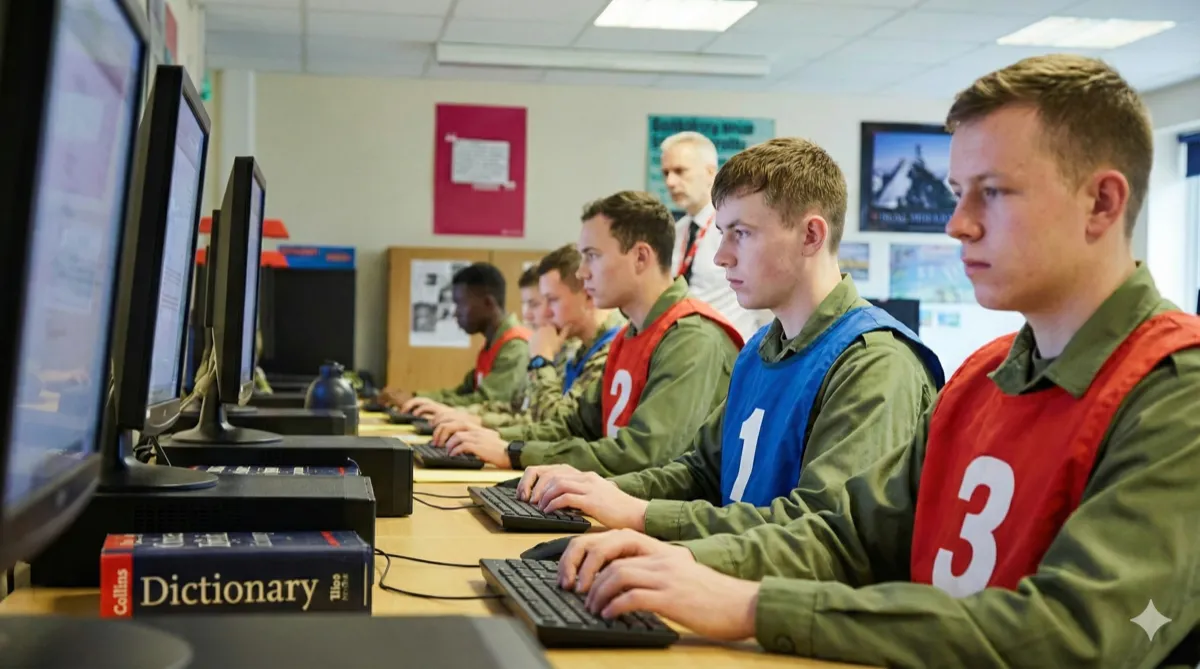
Sandhurst is not a university and has no ambition to be one. Instead it blends academic education directly into military training. All academic lessons take place in Faraday Hall, and are taught by civilian lecturers who are specialists in their fields. A single day can move from tactics in the morning to two hours in the classroom, before battle PT in the afternoon.
The two strands are deliberately intertwined. What you are taught in Faraday Hall is put into practice in the field under real pressure, and academic staff even deploy on exercises to play journalists, political advisers and civilian role-players.
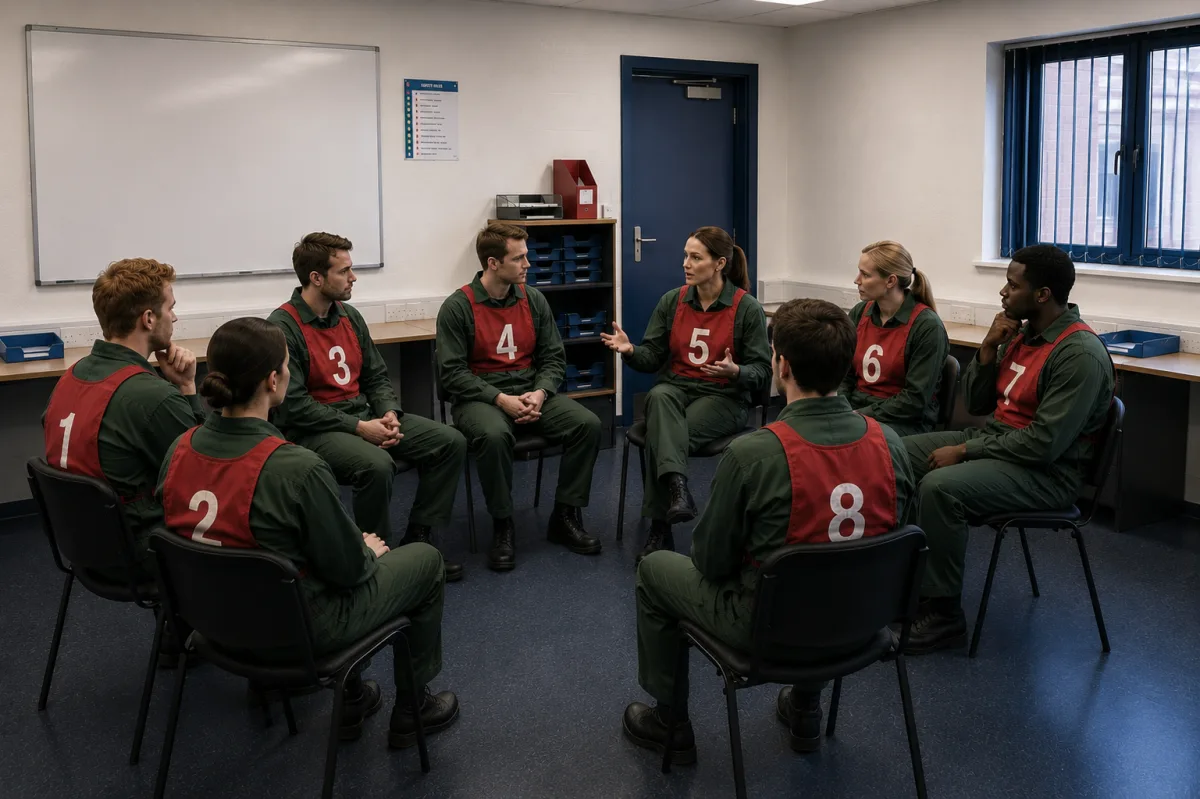
Most lessons are run as small seminars rather than lectures. You are expected to arrive having done the reading, contribute to the debate and defend your arguments. Your performance in class counts towards your grade, and the academic staff write reports that are read by your prospective regiments. The assessment is no formality either. You submit assessed written work throughout the course and sit a proper exam. Your studies cover three areas:
1. War Studies
The study of war itself. You examine modern military history and real campaigns to understand how wars are fought, won and lost, and what that means for you as a commander. You cover the theories of war, manoeuvre warfare, expeditionary operations, insurgency and counter-insurgency, and officership. The highlight is Ex NORMANDY SCHOLAR, those two days spent walking the ground of the 1944 Normandy campaign to study command and decision-making where it happened.
2. Defence and International Affairs
The international relations arm of the Academy, and the reason you will understand why you deploy, not just how. The teaching is rooted in current affairs rather than abstract theory, and seminars track the real security issues you could face on your first posting. You study the international system, security threats and responses, Britain's role in the world, and the Law of Armed Conflict.
3. Communication and Behavioural Sciences
The science of leading people. You learn what actually drives human behaviour, so you can motivate, influence and communicate effectively. The themes run from motivation and group dynamics to influencing, creative problem-solving and negotiation, or in other words, how to reach agreement when you cannot simply give orders.
The Qualifications You Leave With
The academic programme is delivered through a partnership between the British Army and Henley Business School (University of Reading). All cadets earn 120 credits upon finishing the commissioning course, which covers the first third of a degree. If you join as a non-graduate, you receive a Certificate of Higher Education in Leadership & Strategic Studies. If you already have a degree, you receive a Postgraduate Certificate in Leadership & Strategic Studies instead.
Post-Sandhurst, you can choose to continue your studies and earn a full BSc or MSc in Leadership and Strategic Studies while you serve. The pathway is fully funded by the Army, is designed to be completed online around your work, and typically takes between four and seven years to finish. Further information can be found on the Army Higher Education Pathway page. Upon passing out, you are also eligible for the CMI Level 5 Diploma in Leadership & Management, which is funded by the Army and requires no additional work.
All of this means you do not have to choose between Sandhurst and university. Many people worry that committing to the Army means giving up on a degree, but the opposite is true. If you feel ready to commission, you can come to Sandhurst without a degree and still leave with one to your name, earned while you serve and funded by the Army.
Arrive Prepared on Day One
You'll be told repeatedly that Sandhurst teaches you everything you need to know. This is true, but it's only half the picture. The teaching happens, but it's incredibly compressed. The course moves relentlessly forward, and there's no time to fall behind. The more you can arrive knowing, the easier those early weeks become.
Roughly half of Sandhurst cadets arrive with some form of military background, ranging from former regulars or reservists to those with OTC or CCF experience. If you have none, you'll be starting alongside people who do, and the learning curve will be steeper. That makes arriving prepared matter more, not less.
So spend time, where possible, building your basic military skills before you arrive. Some of them you genuinely can't learn beforehand. Weapon handling, for example, needs professional instruction. But others you can practise on your own. Map reading is the clearest case, and even a few sessions with a map and compass before you arrive will pay real dividends if you have no prior military experience.
Fitness is the other area where early preparation counts, and the one that doesn't depend on any prior military experience at all. The fitter you arrive, the more headroom you have for three terms of sustained intensity. I have set out exactly how fit you need to be for Sandhurst, including the day-one numbers to aim for, in a separate guide.
Remember, your declaration of interest goes in at week 9, and regiments start dropping candidates soon after. You are being judged from the moment you arrive, and first impressions can have a huge impact on the trajectory of your entire career. Turning up ready is what keeps you in the running from day one.
Sandhurst FAQs
How long is the Sandhurst commissioning course?
The Regular Commissioning Course runs for 42 weeks of training, divided into three terms of 14 weeks each, known as Juniors, Inters and Seniors, with a period of leave between them. You live at the Academy throughout, first in Old College and later in New College.
When are the Sandhurst intakes?
There are three intakes a year, in January, May and September. Each intake is around 270 officer cadets, split evenly into three companies of about 90, each containing three platoons.
Can you fail Sandhurst?
Yes. The overall pass rate sits at around 96%, but cadets can be removed or back-termed throughout the course for injury, poor performance or falling short on character. Getting in is not the same as getting through.
Do you get a degree from Sandhurst?
Every cadet earns 120 credits through a partnership with Henley Business School, which covers the first third of a degree. Non-graduates receive a Certificate of Higher Education and graduates a Postgraduate Certificate, both in Leadership & Strategic Studies. You can then complete a full BSc or MSc while you serve, fully funded by the Army.
What is Ironing Board Sunday?
It is the name given to your first day at Sandhurst. Every new officer cadet arrives carrying an ironing board, one of the items on the joining instructions, so the Sunday the course begins has become known as Ironing Board Sunday.
The Shortest Year of Your Life
The commissioning course will be the shortest year of your life, though some of the days will feel like the longest. Mine went by in a blur. It will push you to your limits, and transform you from a civilian into a British Army officer with the immense privilege of leading soldiers.
It is a responsibility you will have earned, but one you should never take for granted. Every day, for the rest of your career, you must continue to earn it.
Before any of that, though, you have to win your place. The route to Ironing Board Sunday runs through AOSB Briefing and Main Board, and that is where your preparation should start today.
Ready to Begin Your Prep?
Officer Ready gives you everything you need to arrive at Westbury prepared. Psychometric test practice, planning exercises, and expert guidance from a former British Army officer. Built on the methods the Army uses to develop its own leaders.
View Plans